Creosote: The 3 Stages and What Each One Needs
Creosote's three stages explained: flaky soot, crunchy tar and hard glaze. Why it ignites near 451°F, how each is removed, and the burning habits that prevent it.
By Bison Chimney & Air Duct ·
Every wood fire leaves something behind. Smoke that cools on the way up the flue condenses on the walls as creosote, a deposit that ranges from a dusting of soot to a hard black glaze that looks like it was poured on. The difference between those two is the difference between an easy annual sweep and a chimney fire.
This guide covers the three stages of creosote, how each is removed, and the burning habits that keep a chimney in Overland Park at Stage 1.
What creosote is and why it burns
Wood smoke carries unburned particles, water vapor and volatile gases. When it meets a flue wall that is cooler than the smoke, those gases condense and stick. Over dozens of fires the layer builds, dries and hardens.
Creosote ignites at roughly 451°F. A hot fire in the firebox can push flue temperatures well past that, and once the deposit lights, the flue itself becomes the fire. Chimney fires can roar loudly enough to be heard from the street, or burn slowly and quietly, cracking tiles and heating the framing without anyone noticing. Both kinds damage the chimney, and both start with creosote that should have been removed.
The Chimney Safety Institute of America recommends a sweep once creosote reaches 1/8 inch, and NFPA 211 calls for an annual inspection of every chimney regardless. The stage you are at determines what that sweep involves.
Stage 1: flaky soot
What it looks like
A dull, powdery or flaky black coating, similar to what you would find on the inside of a grill lid. Rub it with a finger and it comes off as dust. It is often mixed with fine ash.
Why it forms
Normal burning of dry wood with a good draft. Every wood fire produces some Stage 1 creosote, and a chimney that only ever reaches Stage 1 is a chimney being used correctly.
How it is removed
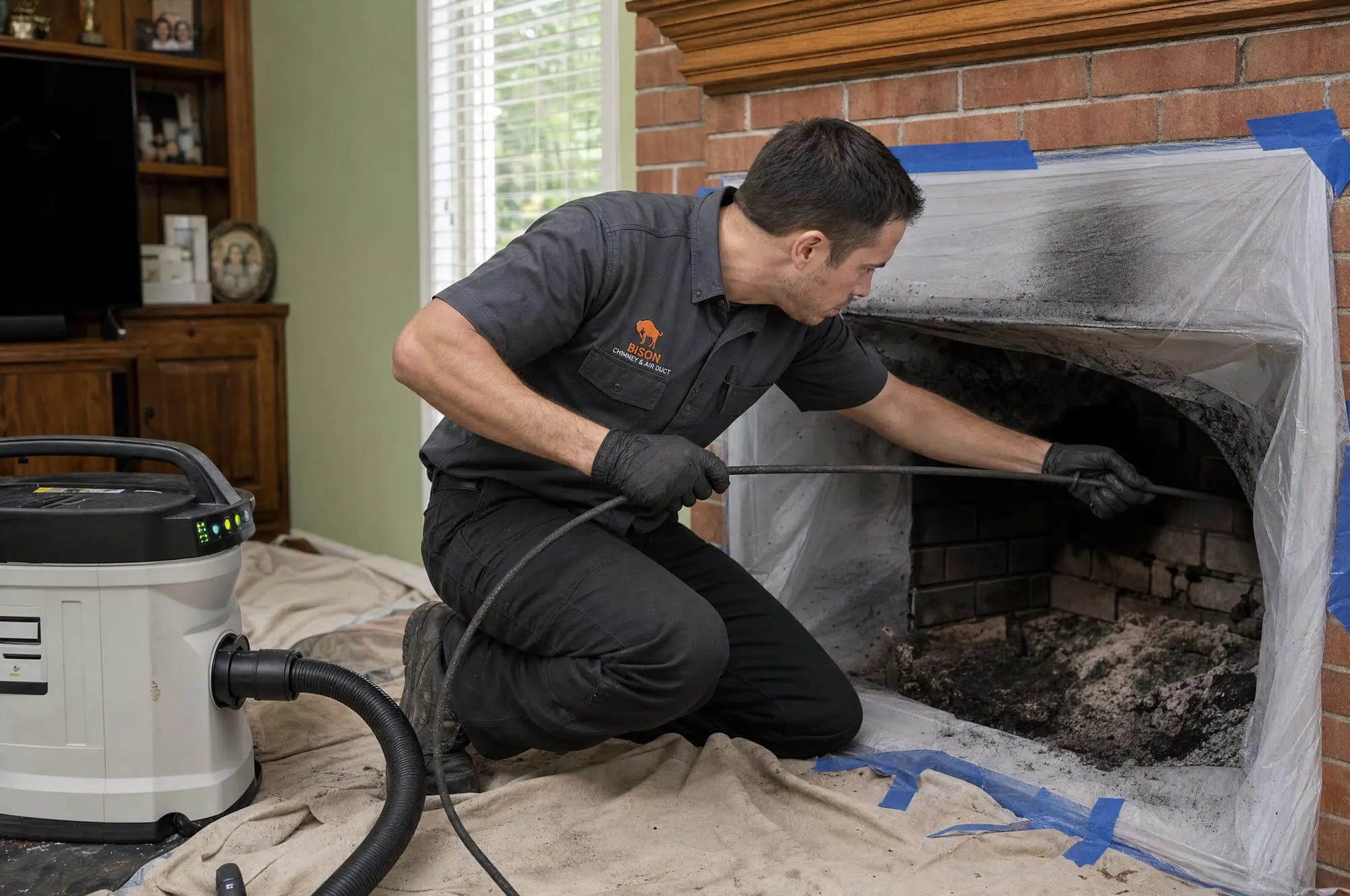
A standard sweep. Rotary or manual brushes knock it loose and a HEPA vacuum at the hearth catches it. A single-flue Stage 1 cleaning is the 45-to-90-minute job described on our chimney sweep page, and it is the least expensive service a chimney will ever need.
Stage 2: crunchy tar flakes
What it looks like
Hard, shiny black flakes and granules, sometimes described as looking like burnt cornflakes or black popcorn. They crunch underfoot on the smoke shelf. The layer is thicker and sticks to the tile more firmly than soot.
Why it forms
Cooler flue temperatures and smokier fires. Common causes are burning wood that is not fully seasoned, running a fireplace with the damper partly closed to make the fire last, an oversized flue that never heats up, or an exterior chimney on the north side of the house that stays cold through a Kansas winter. Wood stoves and inserts vented into a masonry flue without a properly sized liner build Stage 2 quickly, because the flue never gets hot enough to keep the smoke moving.
How it is removed
Stage 2 needs more force than a brush. Rotary whips, flexible cables spun by a drill, chip the flakes off the tile without damaging it. The job takes longer and often reveals a flue in worse shape than the homeowner expected. Once it is clean, the fix is to correct the cause so it does not come back next season.
Stage 3: glaze
What it looks like
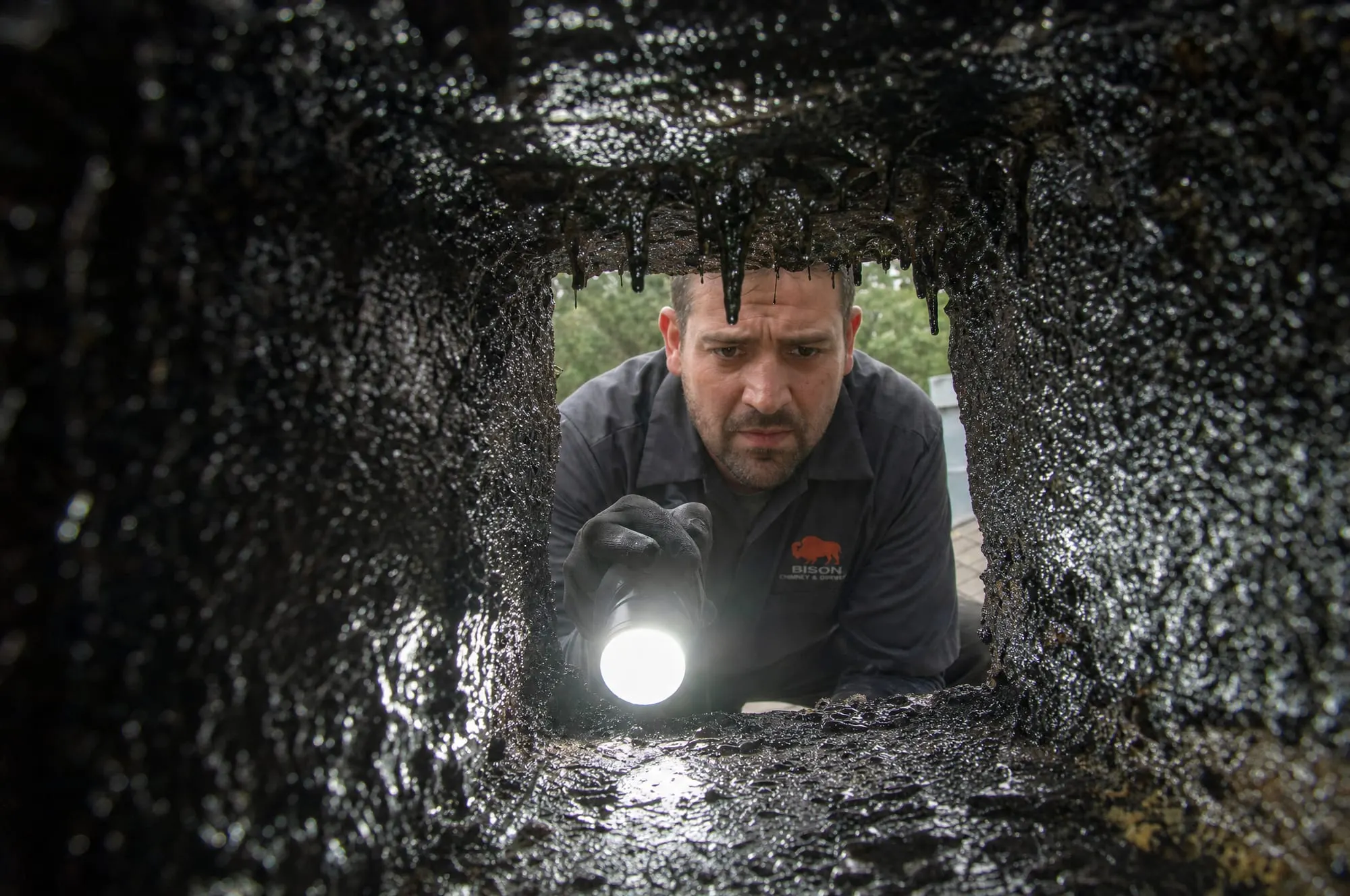
A smooth, hard, shiny coating that looks like tar poured down the flue and left to set. It can be thick enough to noticeably narrow the flue. In hot weather it may soften and drip onto the smoke shelf. It is the most concentrated fuel a chimney can hold, and it is extremely flammable.
Why it forms
Repeated smoldering fires. Wet wood, a damper kept nearly closed, an airtight stove run on low overnight, and a flue that stays cool all produce the slow, wet smoke that glazes. Stage 3 is also common in chimneys that have already had a small fire, because the heat bakes the deposit into place.
How it is removed
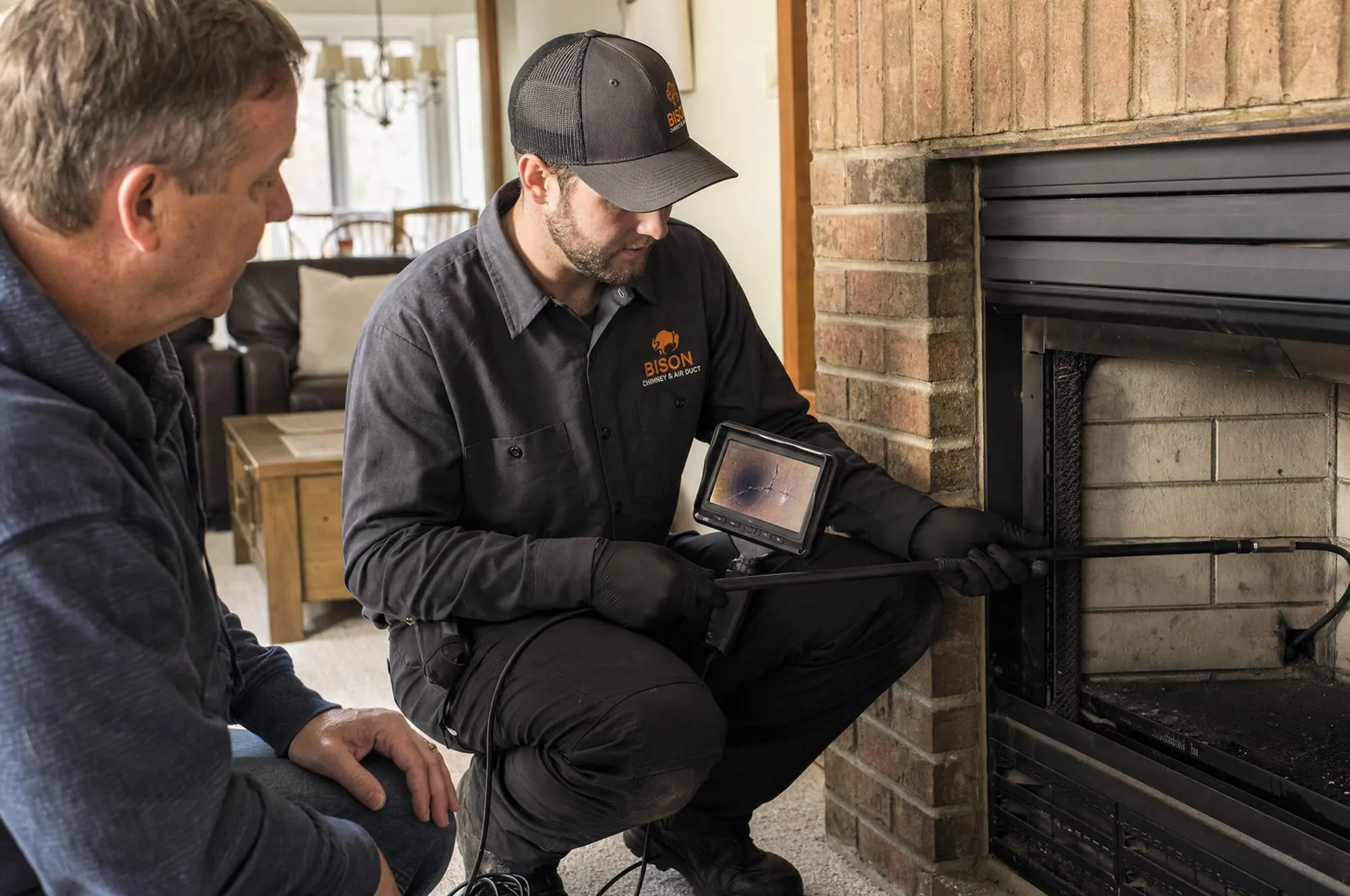
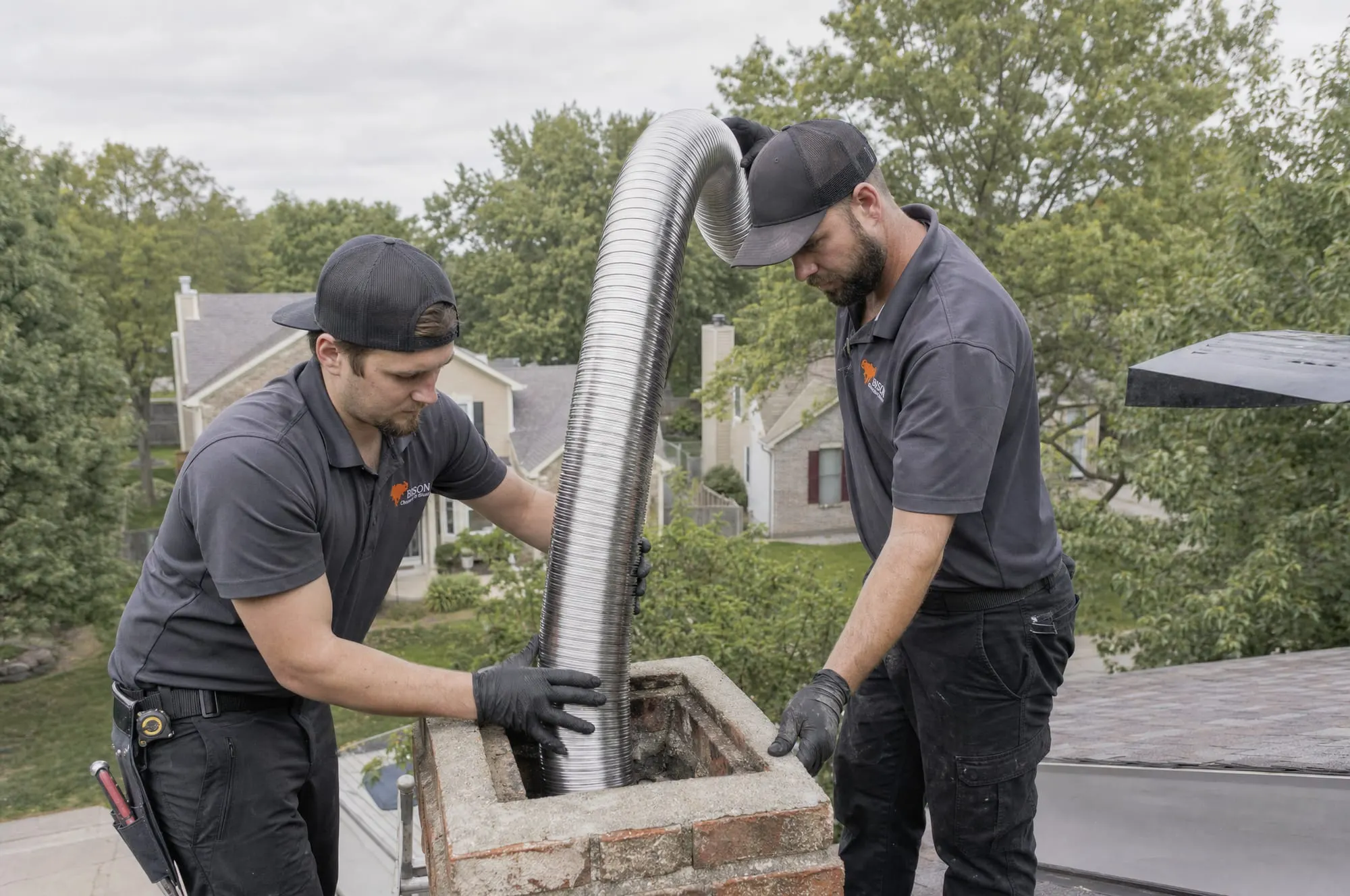
Brushes and whips slide right off glaze. Removal usually means a chemical treatment: a powder or spray applied to the deposit over several fires or several visits that changes its chemistry so it flakes and can be swept. Severe cases need mechanical chain-flail tools, which are hard on clay tiles. If the tiles underneath are already cracked, which a camera inspection will show, the honest answer is often a new stainless steel liner rather than repeated attempts to clean a flue that is no longer sound.
If your sweep finds Stage 3, do not use the fireplace until it is dealt with. A chimney with glazed creosote is one hot fire away from ignition.
How to keep creosote at Stage 1
Creosote is mostly a fuel and airflow problem, and the fixes are in your hands.
- Burn seasoned wood under 20% moisture. Wood split and stacked for a year or more, or checked with an inexpensive moisture meter. Wet wood wastes heat boiling off water and sends that water up the flue as smoke.
- Burn hot. Small, bright fires with the damper fully open keep the flue warm enough that gases exit instead of condensing. A lazy fire with thick smoke is a creosote factory.
- Never burn trash, cardboard, treated lumber or wrapping paper. They produce heavy, chemical-laden smoke and can send embers out the top of the flue.
- Keep the damper open until the fire is out. Closing it early to save heat traps smoke in a cooling flue.
- Use hardwoods. Oak, hickory and ash burn hotter and cleaner than cottonwood or pine, which are plentiful around Kansas City and best left for the campfire.
- Get a cap. An open flue takes on rain, and wet creosote is more corrosive and harder to remove. See chimney caps.
- Sweep annually, or more often if you burn a lot. Most families who burn a few nights a week in winter need one sweep a year. Daily burners and wood stove users may need two.
How to check your own chimney
Wait for a cold fireplace, open the damper, and shine a strong flashlight up the flue. Scrape the tile with a fireplace poker. Dust means Stage 1. Crunchy flakes mean Stage 2. If nothing comes off and the surface looks wet or glassy, that is Stage 3, and it is time to stop burning and call someone.
If you cannot see or reach the flue, or you have an insert, a camera inspection is the only way to know.
Get your flue checked before the first fire
Bison Chimney & Air Duct sweeps chimneys and removes all three stages of creosote across Overland Park, Johnson County and the Kansas City metro, with photos of your flue before and after so you can see the difference. Call us for a free estimate, or send us a message and we will get you on the schedule before the cold snap. If you have never seen the inside of your chimney, this fall is a good time to look.