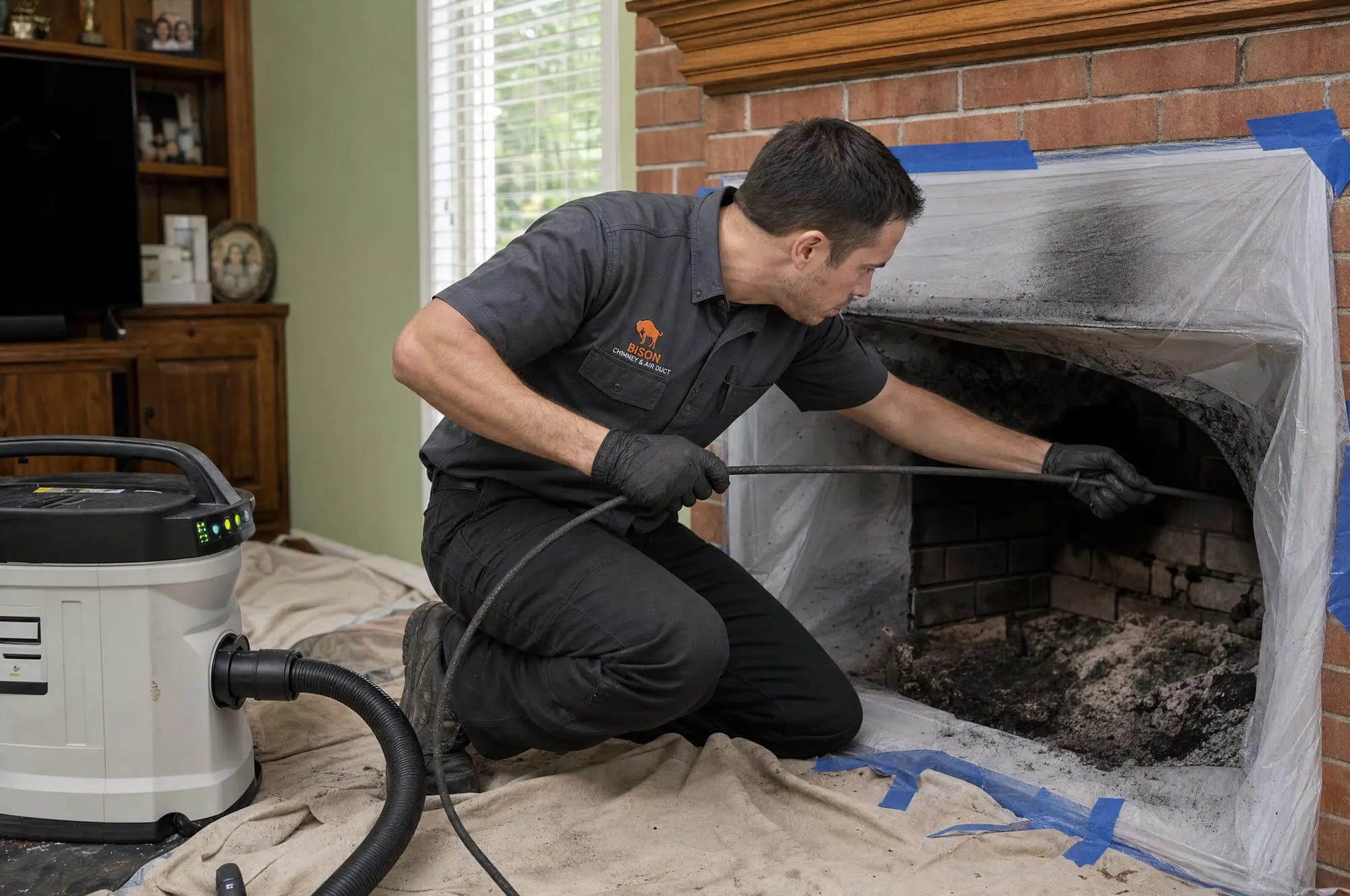
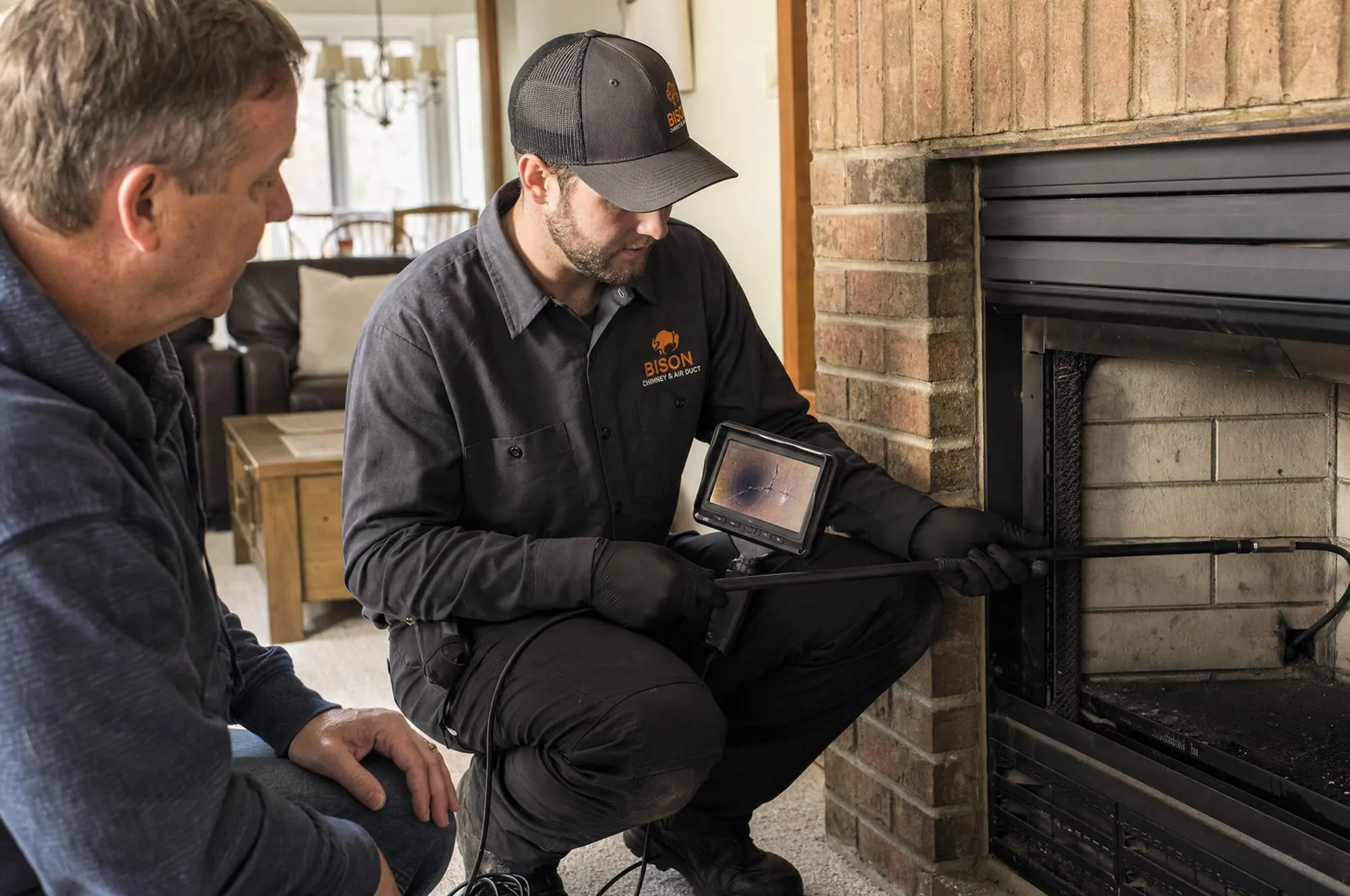
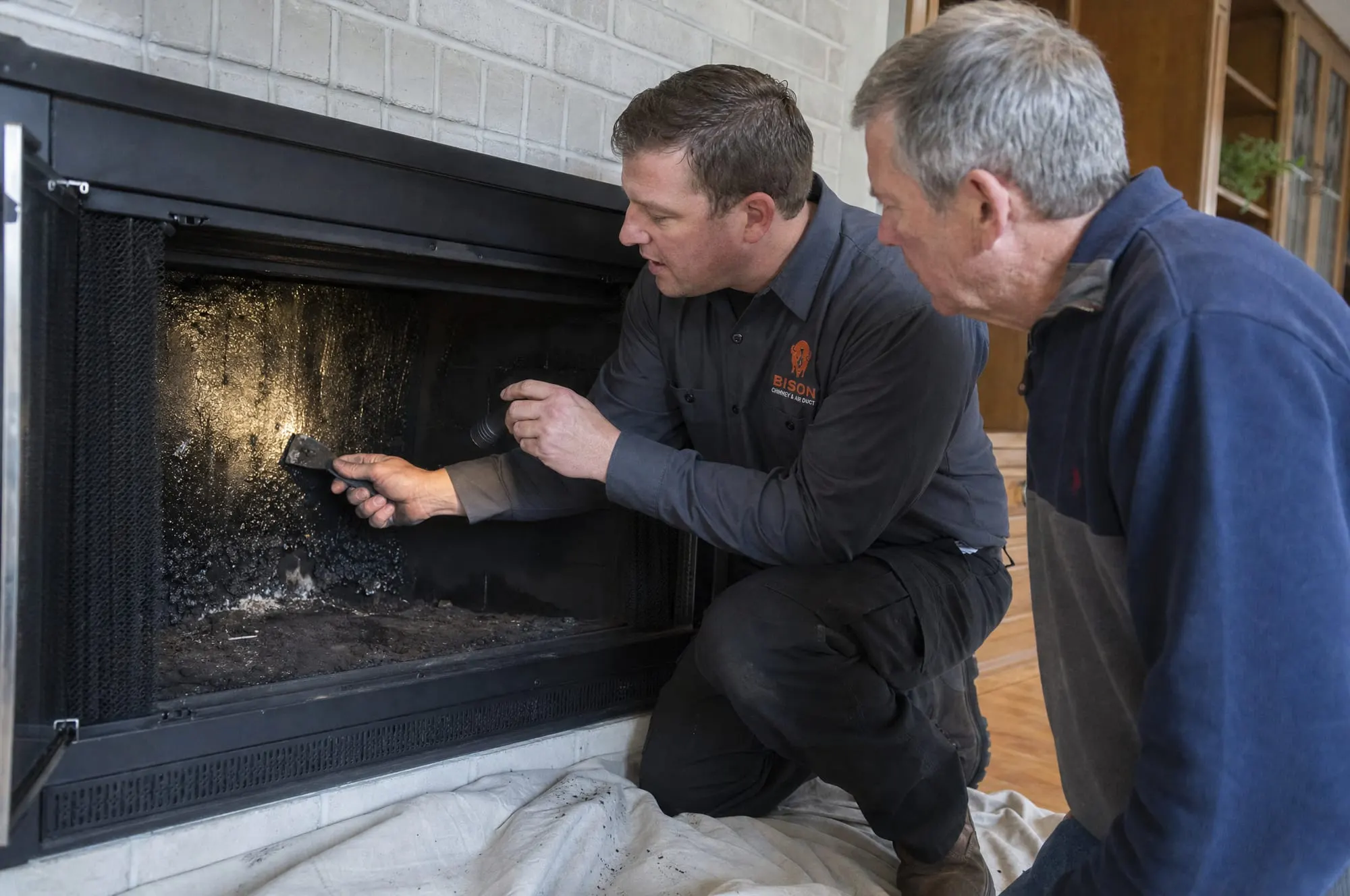
Creosote is the fuel a chimney fire burns. Stage 1 is soft soot that any sweep removes. Stage 2 is hard, crunchy tar flakes that need rotary whips. Stage 3 is a shiny, tar-like glaze that has been baked onto the flue tiles, and it is the deposit behind most destructive chimney fires in Johnson County. Glaze cannot be brushed off; it has to be broken down chemically and mechanically, then verified with a camera.
Bison handles heavy and glazed creosote removal across Overland Park, Prairie Village, Shawnee and the KC metro, and we are honest about the outcome: some Stage 3 flues are better relined than scraped. Our camera inspection tells you which one you have before we start.
What's included in our creosote removal
- Camera assessment to grade the creosote (Stage 1, 2 or 3) and photograph the flue
- Rotary whip and chain sweeping for Stage 2 deposits
- Application of a creosote modifier that converts glaze into a brushable ash over several fires
- Follow-up mechanical removal and camera verification
- Smoke chamber and smoke shelf cleaning where creosote pools
- Written report with before-and-after photos, and a relining quote if the tiles are damaged
Why creosote builds up so fast in some chimneys
Creosote forms when smoke cools below about 250°F before it leaves the flue. Exterior chimneys on the north side of a house, oversized flues, slow smoldering fires, and green or wet wood all cool the smoke and make it condense. Fireplace inserts connected without a full liner are the worst offenders, because the smoke dumps into a huge, cold smoke chamber where the deposit hardens and nobody can reach it.
After a chimney fire
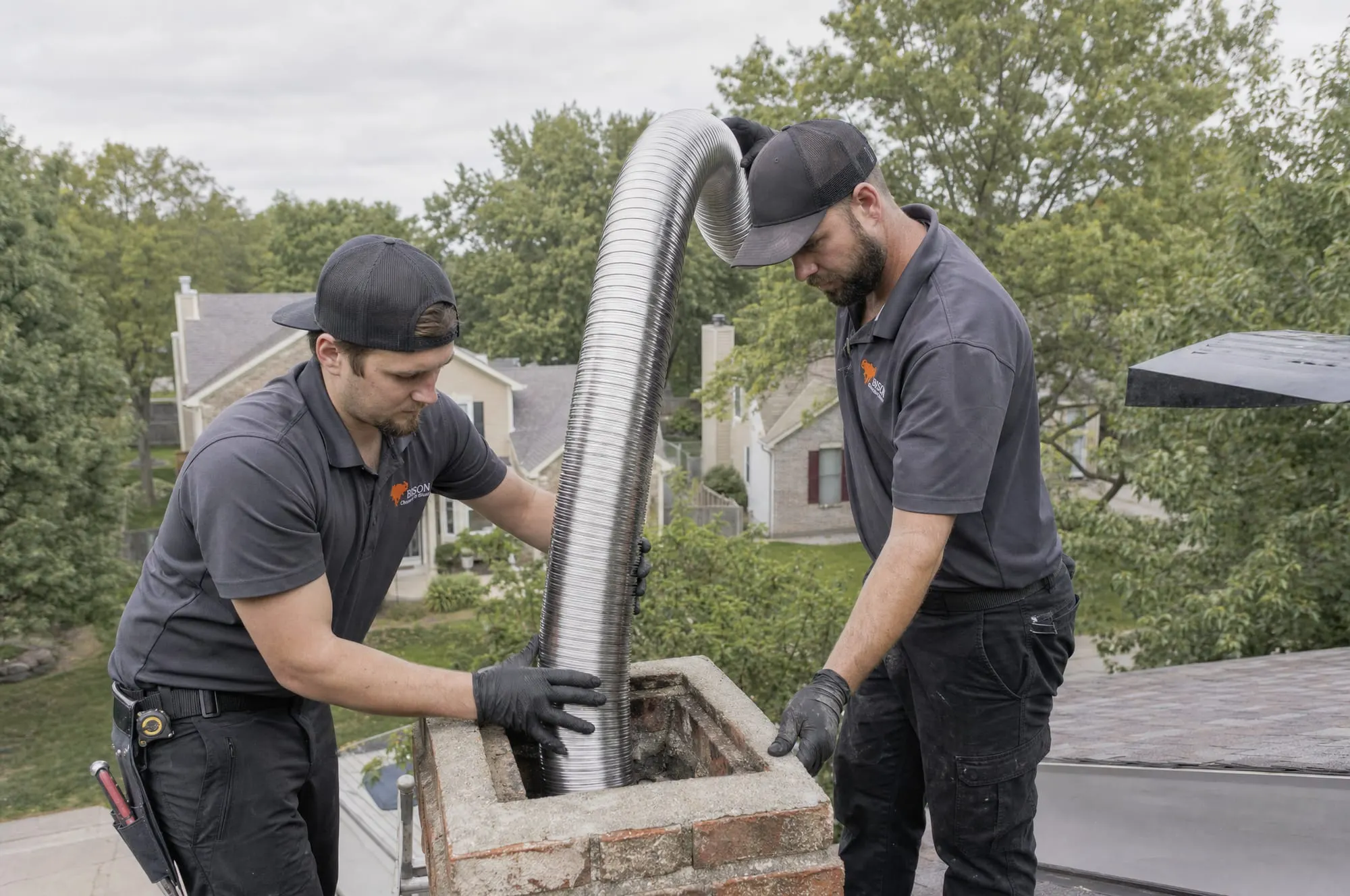
A chimney fire sounds like a freight train or a low roar, and many small ones go unnoticed. If you suspect one, stop using the fireplace and book a Level 2 inspection. Chimney fires crack flue tiles and can warp metal liners. We document the damage with photos for your insurance claim and quote the repair, usually a stainless liner.
Signs of heavy creosote
- Shiny black or tar-like coating visible above the damper
- Puffy, honeycomb-shaped deposits after a hot fire
- A strong campfire smell in summer humidity
- Reduced draft and smoky fires
- Popping or roaring sounds from the chimney during a fire
- Pieces of black crusty material in the firebox
Noticing any of these? Call (913) 555-0100 and we will get you scheduled.
Creosote Removal: frequently asked questions
Can glazed creosote be removed?
Usually yes, with a chemical modifier applied over several fires followed by mechanical removal. In some flues the glaze has bonded so thoroughly to damaged tiles that relining is the safer and cheaper long-term fix.
Do creosote sweeping logs work?
Creosote sweeping logs can loosen light glaze, but they do not remove anything. The loosened deposit still has to be swept out and the flue still needs to be inspected.
How do I prevent creosote buildup?
Burn seasoned hardwood under 20% moisture, build hot fires instead of smoldering ones, keep the damper fully open, and have the flue swept before it reaches 1/8 inch of buildup.
Where we offer creosote removal
Based in Overland Park, serving all of Johnson County and the Kansas City metro with no trip fees.