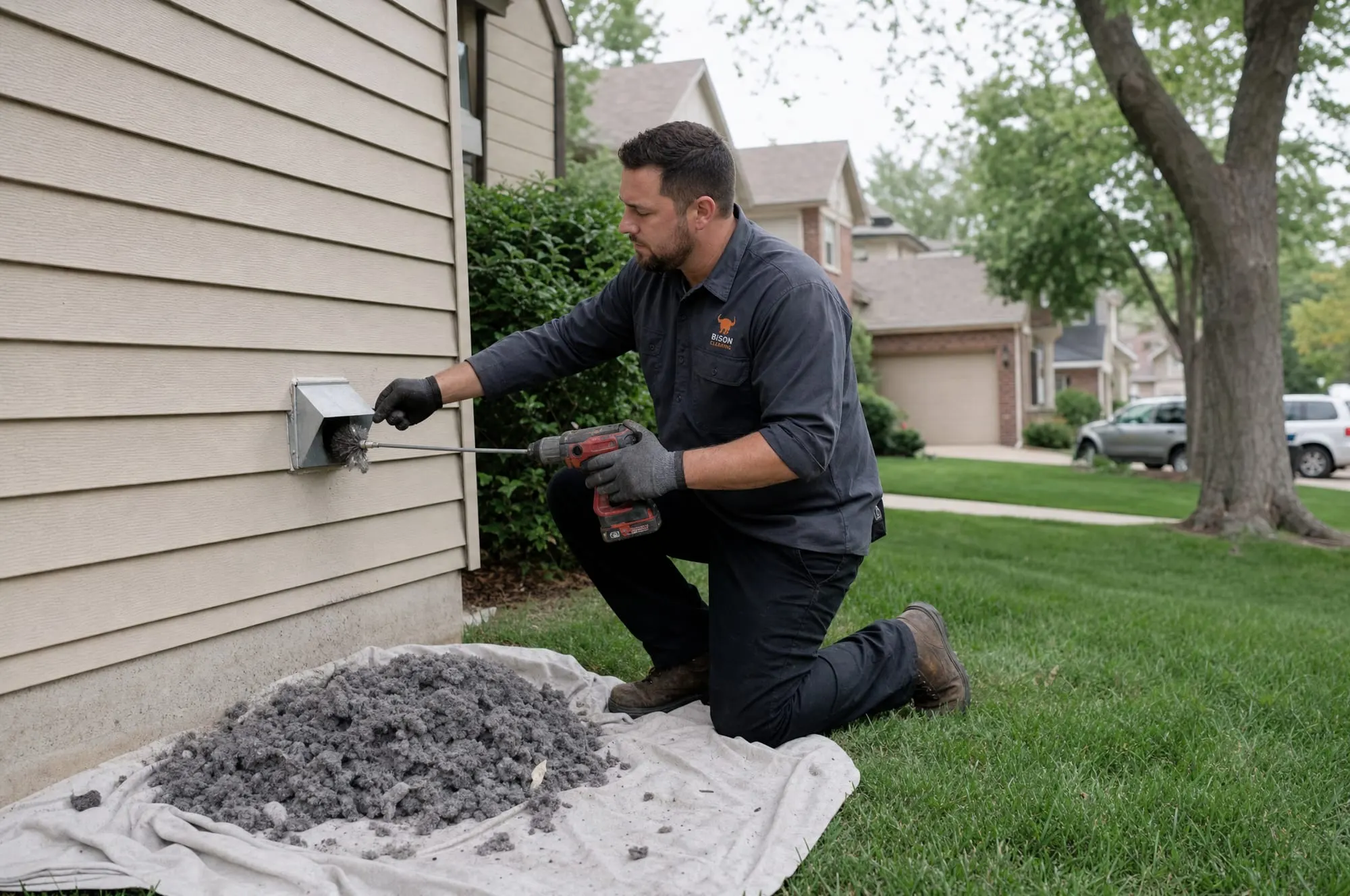
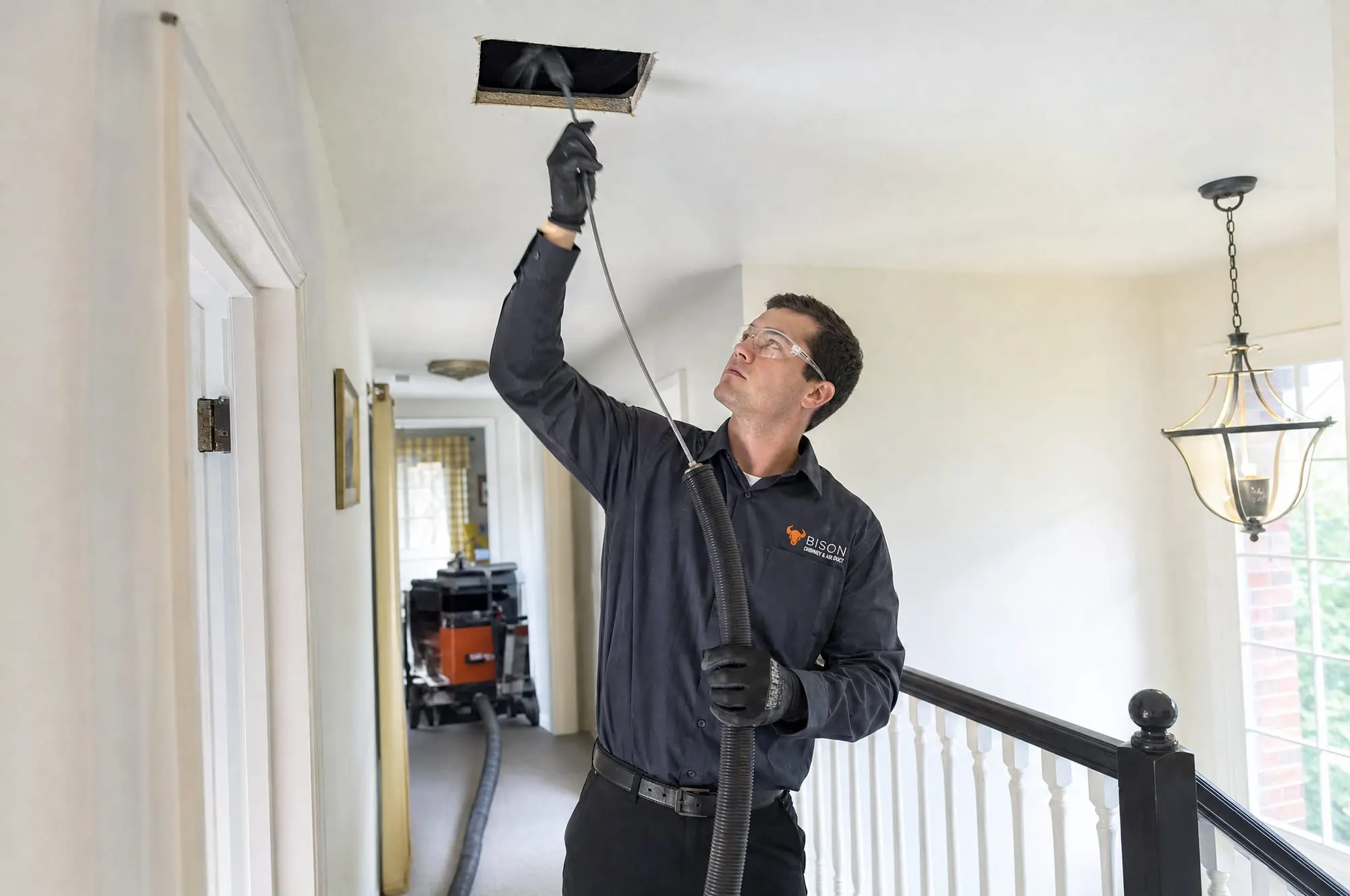
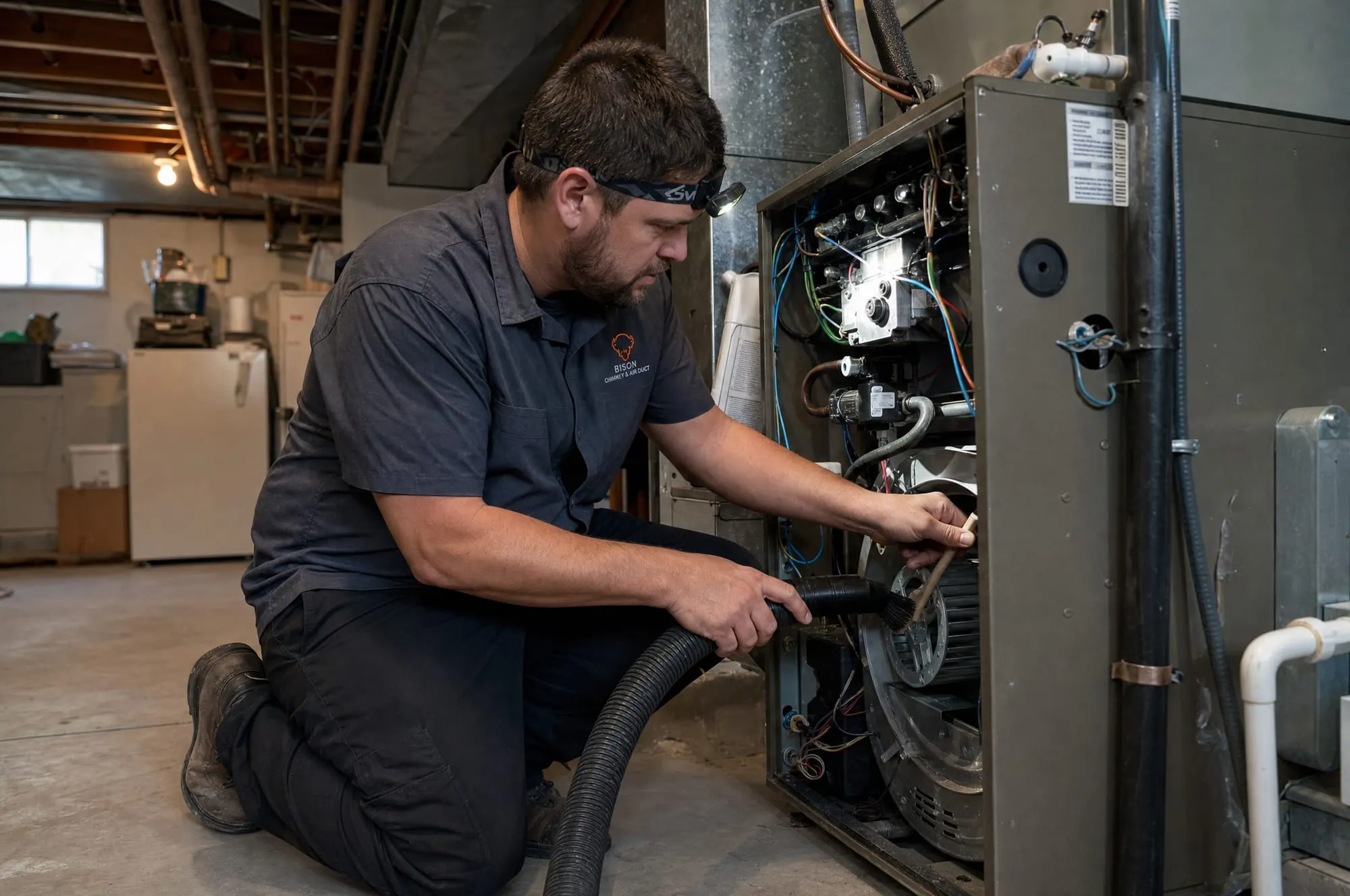
Sometimes a dryer vent cannot be made safe by cleaning alone. Disconnected joints behind drywall, crushed flex duct, vents that terminate in the attic or crawlspace, and 50-foot runs with five elbows are problems we find weekly in Johnson County homes, and every one of them is a fire and moisture hazard.
Bison repairs, replaces and reroutes dryer vents with rigid metal duct, installs proper exterior caps and booster fans where a long run is unavoidable, and installs new vents for laundry rooms that never had a proper one.
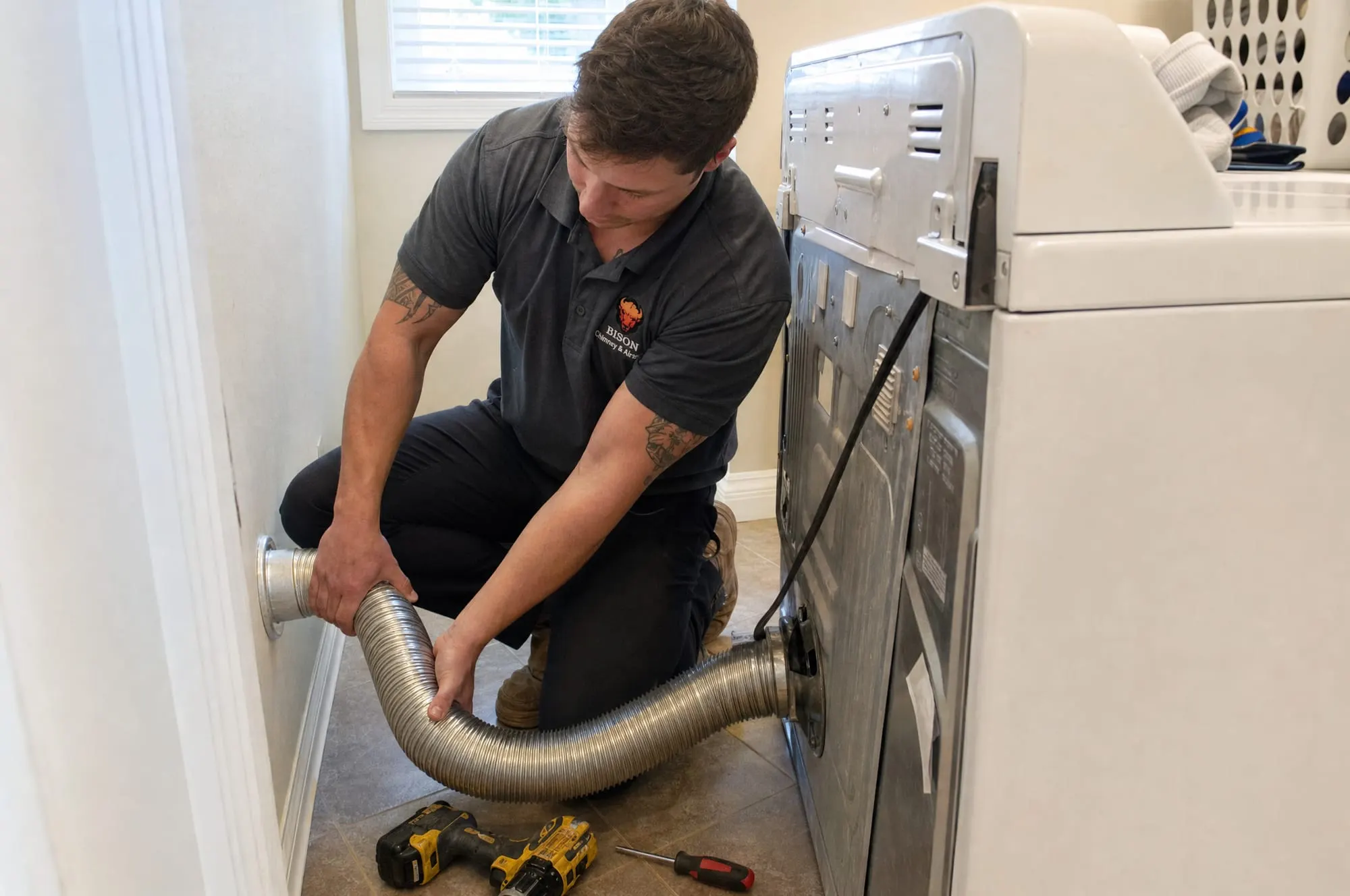
What's included in our dryer vent repair, rerouting & installation
- Camera inspection of the existing vent to locate disconnects and crushed sections
- Replacement of foil, vinyl or damaged vent with rigid or semi-rigid aluminum
- Rerouting to the shortest, straightest path with the fewest elbows
- New exterior wall caps with a working louver or flap, or roof caps with a clean-out
- Dryer booster fan installation for runs over 35 equivalent feet
- Sealing joints with foil tape (never screws, which catch lint)
Vents that end in the attic or crawlspace
It happens more than you would think: a remodel moved the laundry room and the vent was simply pointed into the attic. Every load of laundry then dumps a gallon of warm, humid, lint-filled air into your insulation, which invites mold and creates a fire hazard right under the roof. We reroute the vent to the exterior and clean up the lint.
When a booster fan makes sense
If the vent run is longer than code allows and rerouting is impractical, an inline booster fan pressure-activated by the dryer keeps air moving fast enough to carry lint all the way out. We install them with a clean-out and show you how to check them.
Dryer Vent Repair, Rerouting & Installation: frequently asked questions
What is the best material for a dryer vent?
Rigid smooth-wall aluminum or galvanized steel for the run inside walls, and semi-rigid aluminum for the short connection behind the dryer. Never vinyl or thin foil.
How far can a dryer vent run?
The International Residential Code allows 35 feet, reduced by five feet per 90-degree elbow and two and a half feet per 45, unless the dryer manufacturer specifies otherwise.
Can you install a dryer vent where there is none?
Yes. We plan the shortest route to an exterior wall or the roof, cut and flash the penetration, and install rigid duct with a proper cap.
Where we offer dryer vent repair, rerouting & installation
Based in Overland Park, serving all of Johnson County and the Kansas City metro with no trip fees.