Frequently Asked Questions
Straight answers about chimneys, fireplaces, air ducts and dryer vents, with the standards behind them.
Chimney & fireplace
How often should my chimney be inspected and swept?
NFPA 211, the national standard, says chimneys, fireplaces and vents should be inspected at least once a year and cleaned when needed. Sweeping is due once soot or creosote reaches about 1/8 inch, or whenever glazed creosote is present. Most households that burn regularly need one sweep a year.
What is the difference between a Level 1, Level 2 and Level 3 chimney inspection?
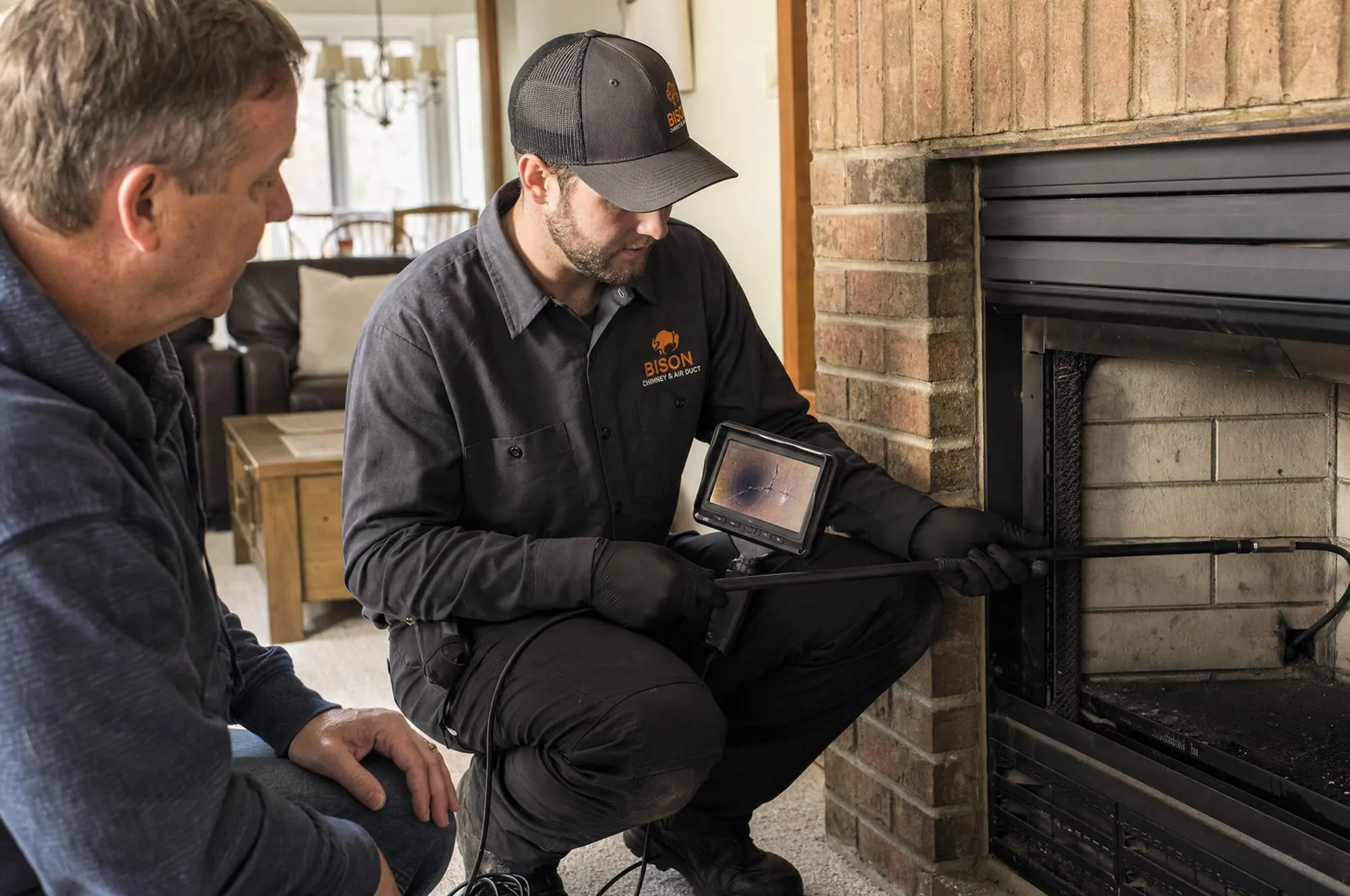
Level 1 is the annual visual check of the accessible parts when nothing has changed. Level 2 adds a video camera scan of the flue plus attic, crawlspace and roof access, and is required when you buy or sell a home, change fuel or appliance, or after a chimney fire or storm damage. Level 3 is rare: it opens up walls or chimney components when a concealed hazard is suspected.
What is creosote and why does it matter?
Creosote is the residue from incomplete wood combustion that condenses on the flue walls. Stage 1 is dry, flaky soot that brushes off. Stage 2 is hard, shiny tar flakes that need rotary tools. Stage 3 is a glazed, tar-like coating that is concentrated fuel and needs chemical treatment or, in bad cases, relining. All three can ignite; Stage 3 is behind most destructive chimney fires.
Does a gas fireplace need a chimney inspection?
Yes. Gas flues collect debris and nests, liners corrode from acidic condensation, and a blocked gas flue can push carbon monoxide into the house. The annual inspection in NFPA 211 applies to gas appliances too.
Why does my fireplace smell in the summer?
Humidity plus creosote. Warm, damp summer air flows down the flue and picks up the smell of the deposits, and air conditioning pulls it into the house. A sweep removes the source, and a top-sealing damper stops the downdraft.
Chimney cap or chase cover: which one do I have?
If your chimney is brick or stone, it has a crown on top and a cap over the flue. If it is wrapped in siding, it is a factory-built chimney with a metal chase cover on top and a small cap on the pipe. Rust streaks on the siding mean the chase cover is failing.
I am buying or selling a home in Johnson County. Do I need a chimney inspection?
A Level 2 inspection with a video scan is the standard for any real estate transfer. General home inspectors only look at what is visible and usually write "recommend evaluation by a qualified chimney professional." Our report gives you photos and a repair estimate you can use in negotiation.
Air ducts & dryer vents
How often should air ducts be cleaned?
NADCA recommends every 3 to 5 years for a typical home. The EPA says to clean on condition: visible mold, pests, or dust actually blowing from the registers. Pets, smokers, renovations and allergy sufferers move a home toward the shorter end.
How often should a dryer vent be cleaned?
Once a year for most households, more often for long runs, roof terminations or large families. The U.S. Fire Administration reports roughly 2,900 residential dryer fires a year, and failure to clean is the leading cause. Longer dry times, a hot dryer or a burning smell mean it is overdue.
Is duct sanitizing necessary?
Only after mold, pests or water intrusion, and only with an EPA-registered product applied after the debris has been physically removed. A sanitizer sprayed into dirty ducts does almost nothing, and we do not sell it that way.
What is the $99 duct cleaning special?
A bait. The crew arrives, vacuums the register covers, then "discovers" mold and upsells the real job for many times the advertised price. Legitimate whole-home cleaning connects a negative-air machine to the trunk lines and agitates every run. We quote that price flat, on the phone.
Will chimney sweeping or duct cleaning make a mess in my home?
No. The fireplace opening is sealed and a HEPA vacuum runs during a sweep. For ducts, the system is placed under negative pressure before any brushing starts, so dislodged debris goes into the collection unit, not your rooms. Drop cloths and shoe covers every time.
Booking, pricing & credentials
How long does a visit take?
A chimney sweep with a Level 1 inspection takes about 45 to 90 minutes. A Level 2 with camera is 1.5 to 2 hours. Dryer vent cleaning is 30 to 90 minutes. A whole-home air duct cleaning is 3 to 5 hours for a single-system house.
Do you charge a trip fee or a service call fee?
No trip fees anywhere in Johnson County or the Kansas City metro. Inspections and sweeps are priced flat, and repair estimates are free when they follow an inspection.
Are you certified, licensed and insured?
Kansas has no state chimney sweep license, which is why CSIA certification is the credential to look for; our sweeps hold it. We carry general liability and workers compensation coverage in Kansas and Missouri, and structural chimney work is done under the Johnson County contractor licensing program.
What payment methods do you accept?
Cash, check and all major credit cards, paid when the job is done and you have seen the photos.
Ready for a cleaner, safer home?
Call now for same-day availability, or request a free estimate and we will call you back.