A chimney sweep is the single most effective thing you can do to prevent a chimney fire. Every time you burn wood, unburned particles condense on the flue walls as creosote, a tar-like deposit that ignites at around 450°F. Bison sweeps remove it with professional rotary equipment while a HEPA vacuum keeps the soot out of your living room.
We serve Overland Park, Leawood, Olathe, Lenexa, Prairie Village and the rest of Johnson County, with same-day chimney cleaning available most of the year. Book early in fall if you can: October and November fill up fast.
What's included in our chimney sweeping & cleaning
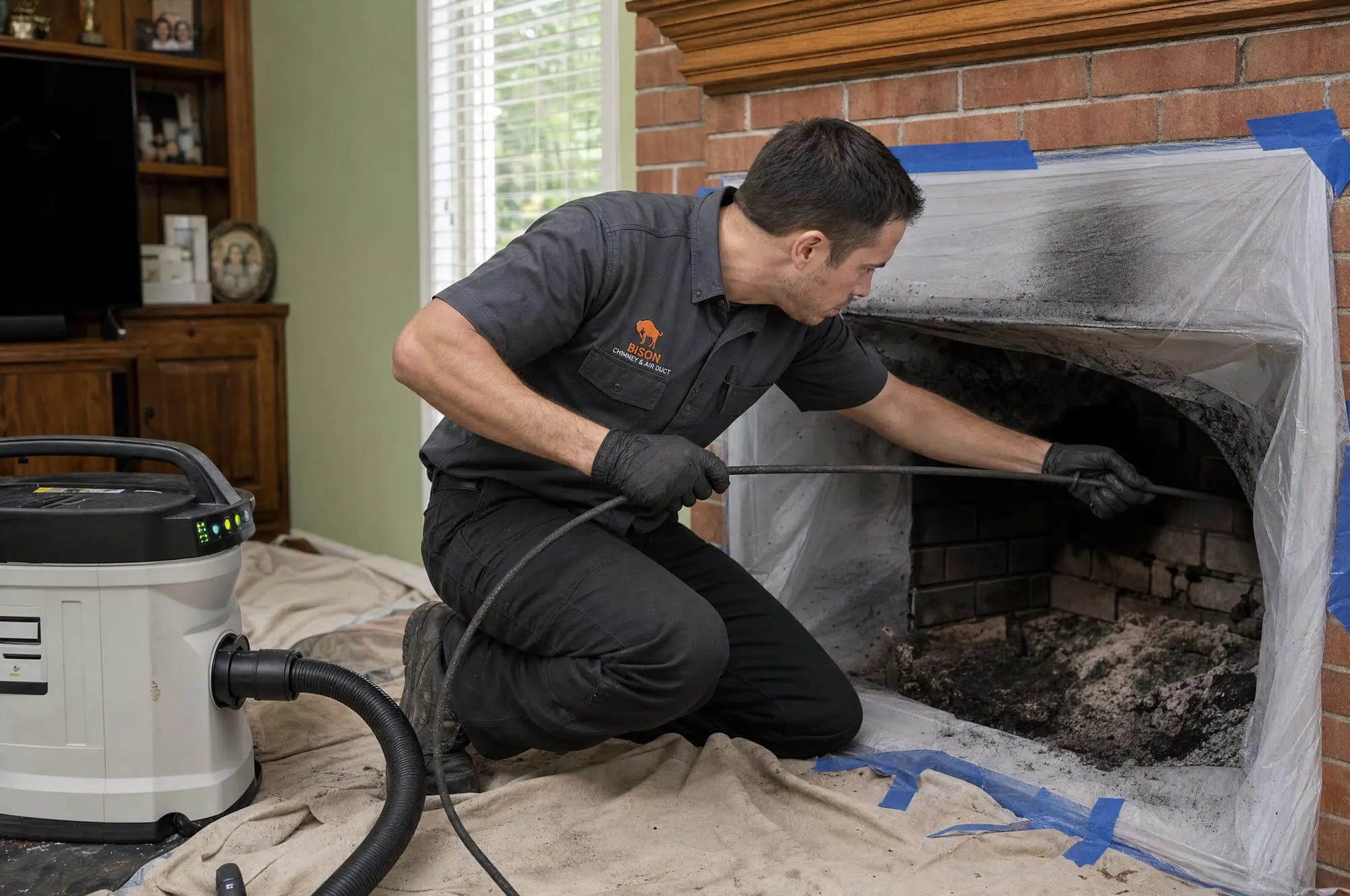
- Drop cloths, shoe covers and a HEPA vacuum running the entire time
- Rotary or manual sweeping of the firebox, smoke shelf, smoke chamber and full flue
- Damper, firebox and visible flue check (Level 1 inspection per NFPA 211)
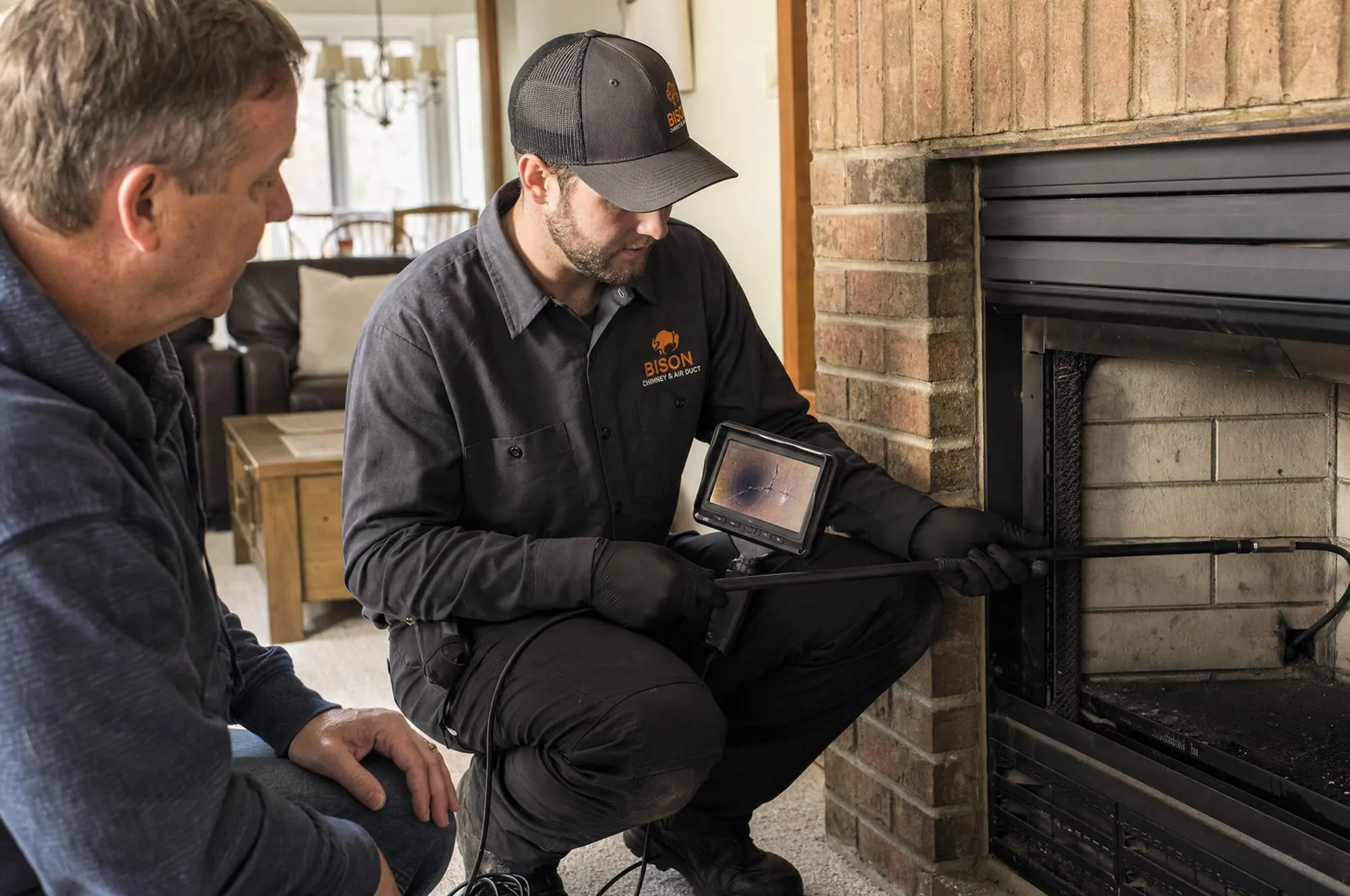
- Before-and-after photos of your flue on a tablet, emailed to you
- Plain-English recommendations, no pressure
How often should a chimney be swept?
The Chimney Safety Institute of America recommends sweeping once 1/8 inch of creosote has built up, and the National Fire Protection Association (NFPA 211) says every chimney should be inspected at least once a year. For most Johnson County families who burn a few fires a week in winter, that works out to one sweep every year, ideally in late summer or early fall before the first cold snap.
Burn a lot, burn unseasoned wood, or use a wood stove or insert? You may need two cleanings a season. Gas fireplaces still need an annual check even though they produce far less creosote, because birds, leaves and deteriorating flue tiles can block the vent.
What our chimney cleaning process looks like
Your technician arrives in a marked Bison van, lays down drop cloths, and seals the fireplace opening with a plastic barrier so nothing escapes. From inside, we run a rotary brush up the flue while the HEPA vacuum captures everything that comes down. For very tall or heavily glazed flues we sweep from the roof as well. We finish with a camera look at the flue, walk you through the photos, and leave the hearth cleaner than we found it.
- Stage 1 creosote (flaky soot) sweeps out easily
- Stage 2 creosote (crunchy tar flakes) needs rotary whips
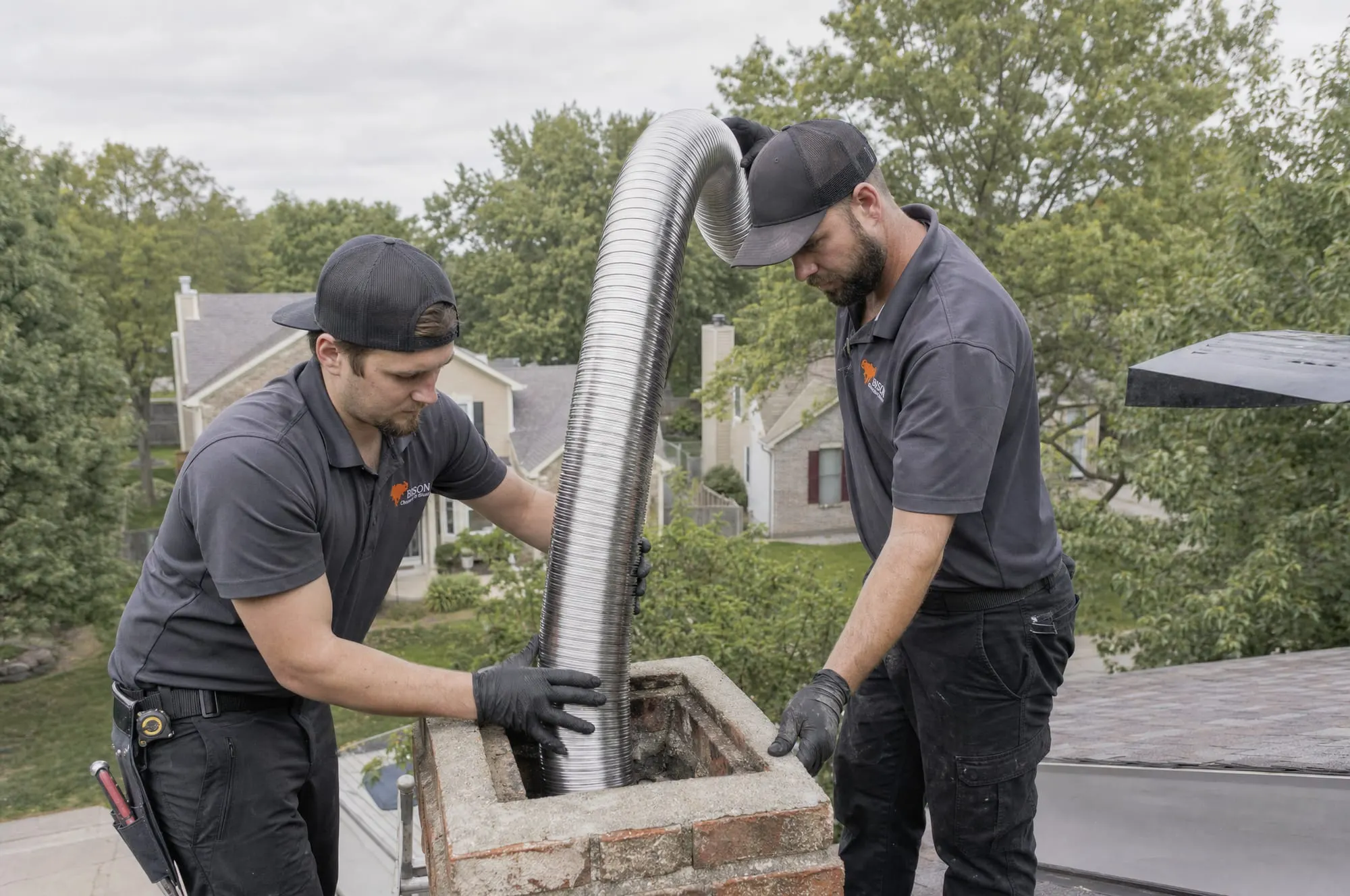
- Stage 3 glazed creosote is a fire hazard and may need chemical treatment or relining
Signs your chimney needs cleaning
- Smoke rolling back into the room
- A campfire smell in the house, especially in humid weather
- Black, crusty or shiny buildup you can see inside the damper
- Poor draft or fires that are hard to keep going
- It has been more than a year since your last sweep
Noticing any of these? Call (913) 555-0100 and we will get you scheduled.
Chimney Sweeping & Cleaning: frequently asked questions
How long does a chimney sweep take?
Most single-flue cleanings take 45 to 90 minutes, including the inspection and photo walkthrough. Heavy creosote or multiple flues take longer.
Will a chimney cleaning make a mess in my house?
No. We seal the fireplace opening, run a HEPA vacuum the whole time and lay drop cloths from the door to the hearth. Dust control is part of the job, not an add-on.
Do gas fireplaces need to be swept?
Gas fireplaces produce very little creosote, but the vent still needs an annual inspection for blockages, corrosion and proper draft, and the burner and pilot benefit from a cleaning.
What is the best time of year for a chimney sweep?
Late spring through early fall. Creosote absorbs humidity over summer and gets more corrosive and smelly, and you will beat the October rush.
Where we offer chimney sweeping & cleaning
Based in Overland Park, serving all of Johnson County and the Kansas City metro with no trip fees.