Freeze-Thaw: Why Kansas Winters Eat Brick Chimneys
Why Kansas winters break brick chimneys: water expands about 9% when it freezes, causing spalling, crown cracks and mortar loss. What caps, crowns and repellent do.
By Bison Chimney & Air Duct ·
A brick chimney in Kansas lives a hard life. It sticks up above the roof where nothing shelters it, it gets soaked by rain and snow, and then the temperature drops below freezing. That last part is what does the damage. The weather here can swing from the 50s to the teens and back again in a single week, and every one of those swings is a freeze-thaw cycle working on the masonry.
Here is what happens, what it looks like on your chimney, and what stops it.
The physics: water expands about 9% when it freezes
Brick and mortar are porous. They absorb water the way a sponge does, more slowly but just as surely. A chimney with no water repellent takes on a surprising amount of water in a hard rain and holds it inside the brick faces, the mortar joints, the crown and the gap between the flue tiles and the brick.
When that water freezes, it expands by about 9 percent. Water trapped inside a pore has nowhere to go, so the expansion pushes outward on the material around it. One cycle does almost nothing. Dozens of cycles a winter, over years, opens microscopic cracks into visible ones, and visible cracks let in more water, which freezes, which opens them further. The process feeds itself.
A Kansas City winter delivers those cycles by the dozen, because so many days cross back and forth over 32°F. That is why a chimney that looked fine five years ago now has a pile of brick chips in the gutter.
What freeze-thaw damage looks like
Spalling brick
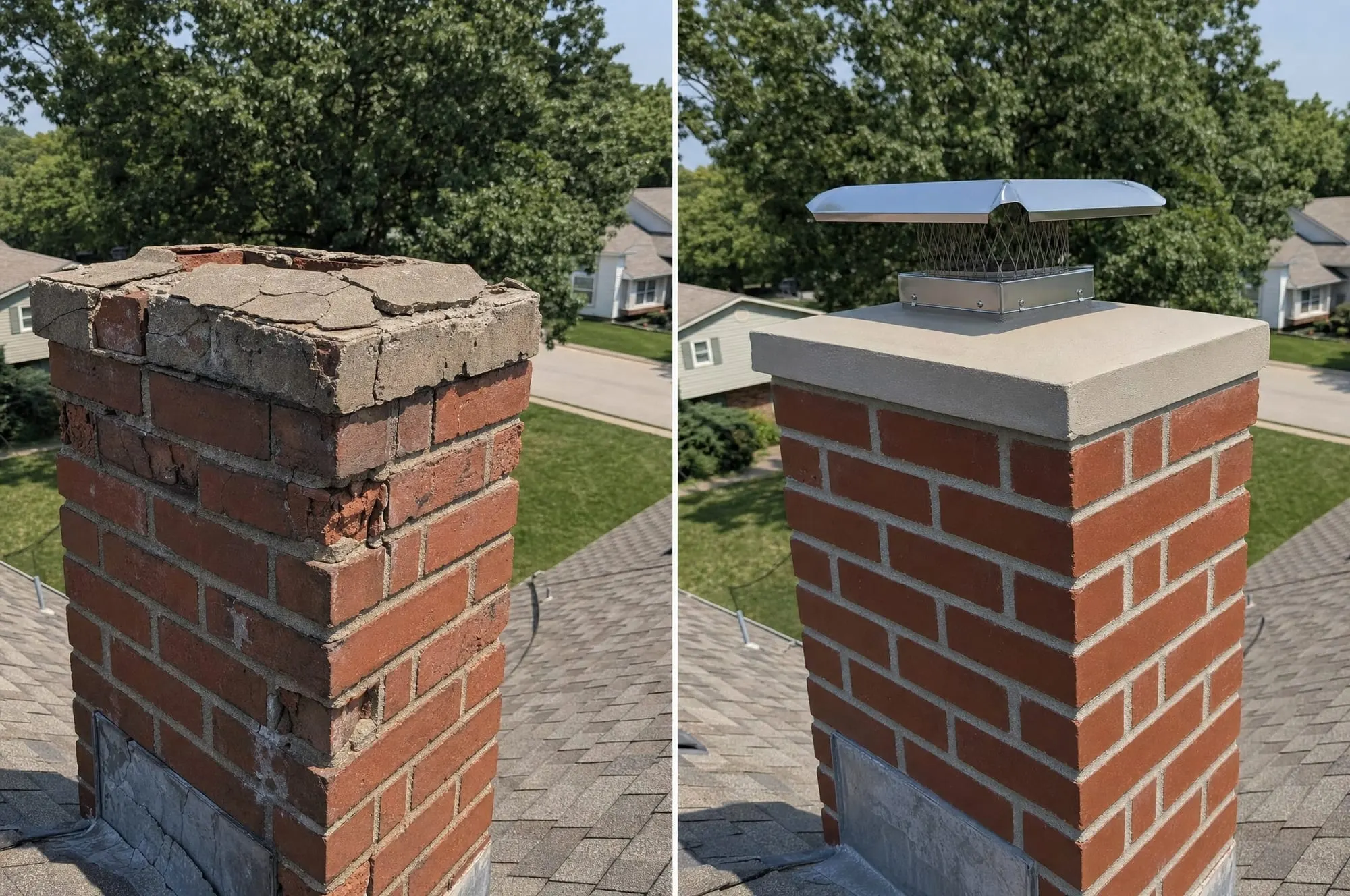
Spalling is the face of a brick popping off. Water gets into the brick, freezes just behind the surface, and shears the face away, leaving a rough, lighter-colored patch. You will find the pieces on the roof, in the gutters or on the ground beside the house. Once the face is gone, the softer interior of the brick is exposed and absorbs water even faster, so a single spalled brick becomes a cluster within a few winters.
Softer bricks and bricks never meant for exterior exposure spall first. Chimneys built in the 1960s through 1980s across Johnson County have plenty of both.
Crown cracks
The crown is the slab on top of the chimney that sheds water away from the flue and the brick below. It should be poured concrete, thick at the edges, with a drip edge overhanging the brick. Most crowns on older homes here are a thin layer of mortar troweled on by the bricklayer, and mortar cracks.
Once the crown has a hairline crack, water runs into it, freezes and widens it. Then water runs down between the flue tiles and the brick, into the core of the chimney, where it freezes again. A cracked crown is the most common source of freeze-thaw damage we find, and it does damage you cannot see until it is severe.
Mortar joint loss
Mortar is softer than brick by design, so it takes the movement and fails first. Freeze-thaw eats the joints from the outside in: the face of the joint crumbles, the recess catches more water, and the joint keeps retreating. Look for sandy residue at the base of the chimney, joints that look recessed or hollow, and mortar you can scrape out with a key.
Deep joint loss is structural. A chimney with badly deteriorated joints above the roofline can lean, and in high wind it can fail.
Efflorescence and staining
The white, powdery deposit on brick is efflorescence, salts left behind when water moves through the masonry and evaporates. It is not damage in itself, but it is proof that water is moving through the chimney, which means freeze-thaw is at work.
Damage inside the flue
Water that gets past the crown reaches the flue tiles and their mortar joints, and it freezes there too. Cracked tiles and washed-out joints show up on camera during a Level 2 inspection, and they are often the interior evidence of an exterior water problem.
What stops it: caps, crowns and breathable water repellent
Freeze-thaw damage is a water problem. Keep the water out and the freezing has nothing to work on. Three components do most of the work.
A chimney cap
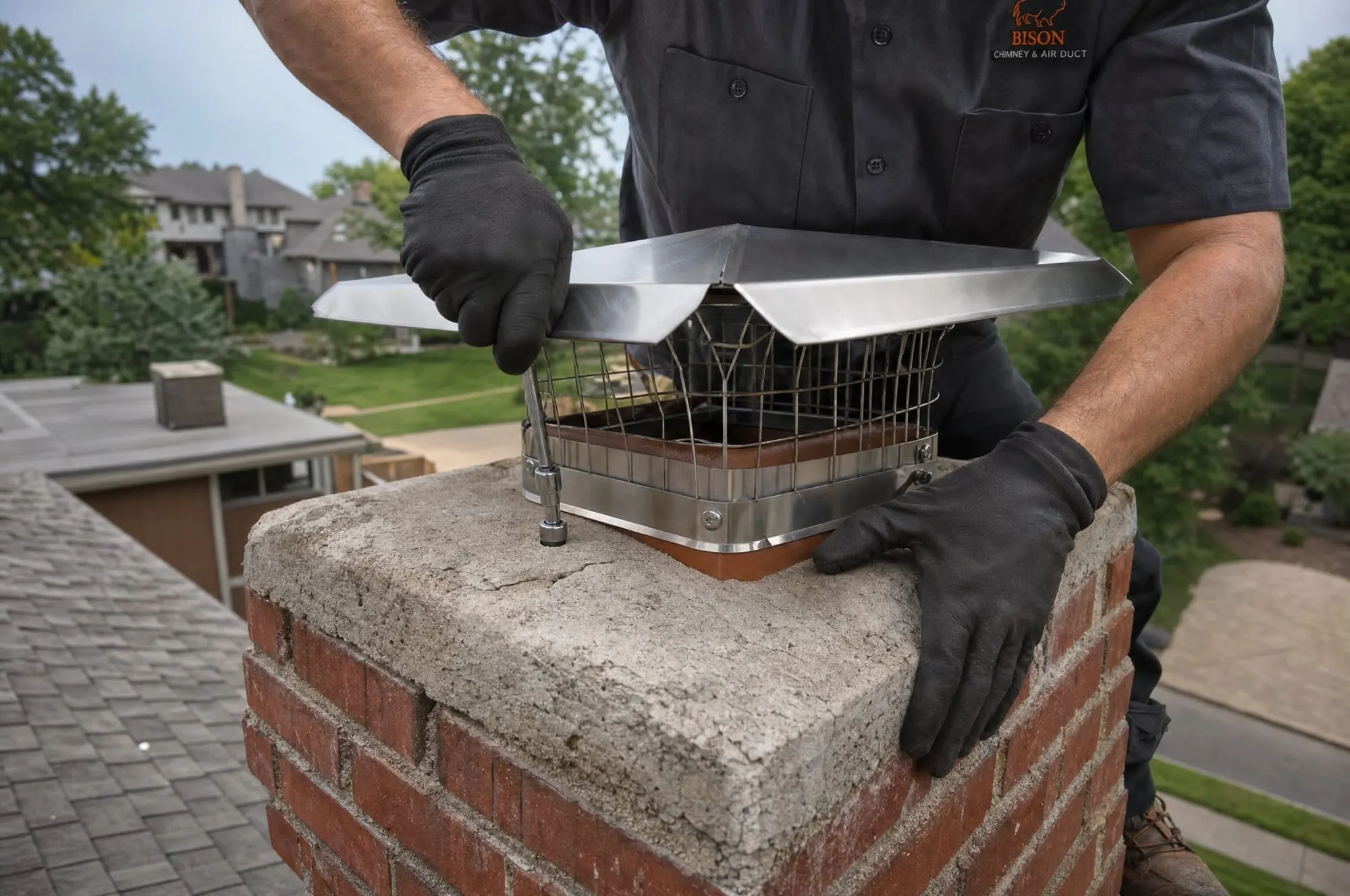
An uncapped flue is an open pipe into the chimney. Rain and snow fall straight in, soak the smoke shelf and the tiles, and freeze. A stainless steel cap with a mesh screen keeps precipitation and animals out and costs less than almost any other chimney work. About a third of the chimneys we inspect have no cap or one that has rusted through. Caps and chase covers are the first thing to fix.
A sound crown
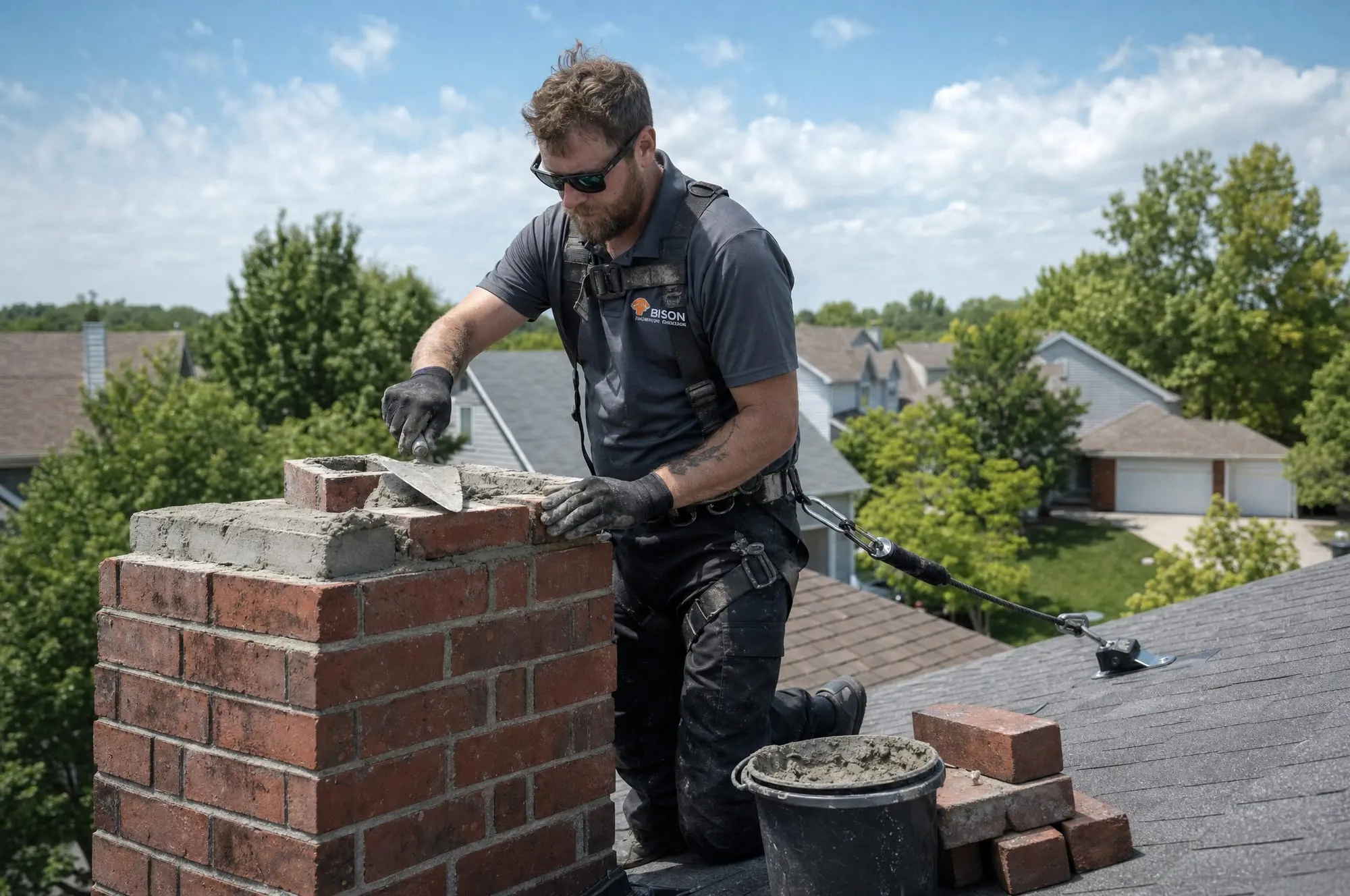
A crown in good shape sheds water off the top of the chimney and away from the brick. Hairline cracks in a structurally sound crown can be sealed with a flexible crown coating. A crown that is badly cracked, crumbling or made of mortar rather than concrete should be rebuilt in formed concrete with a proper overhang and drip edge. Our chimney repair service covers both.
Breathable water repellent
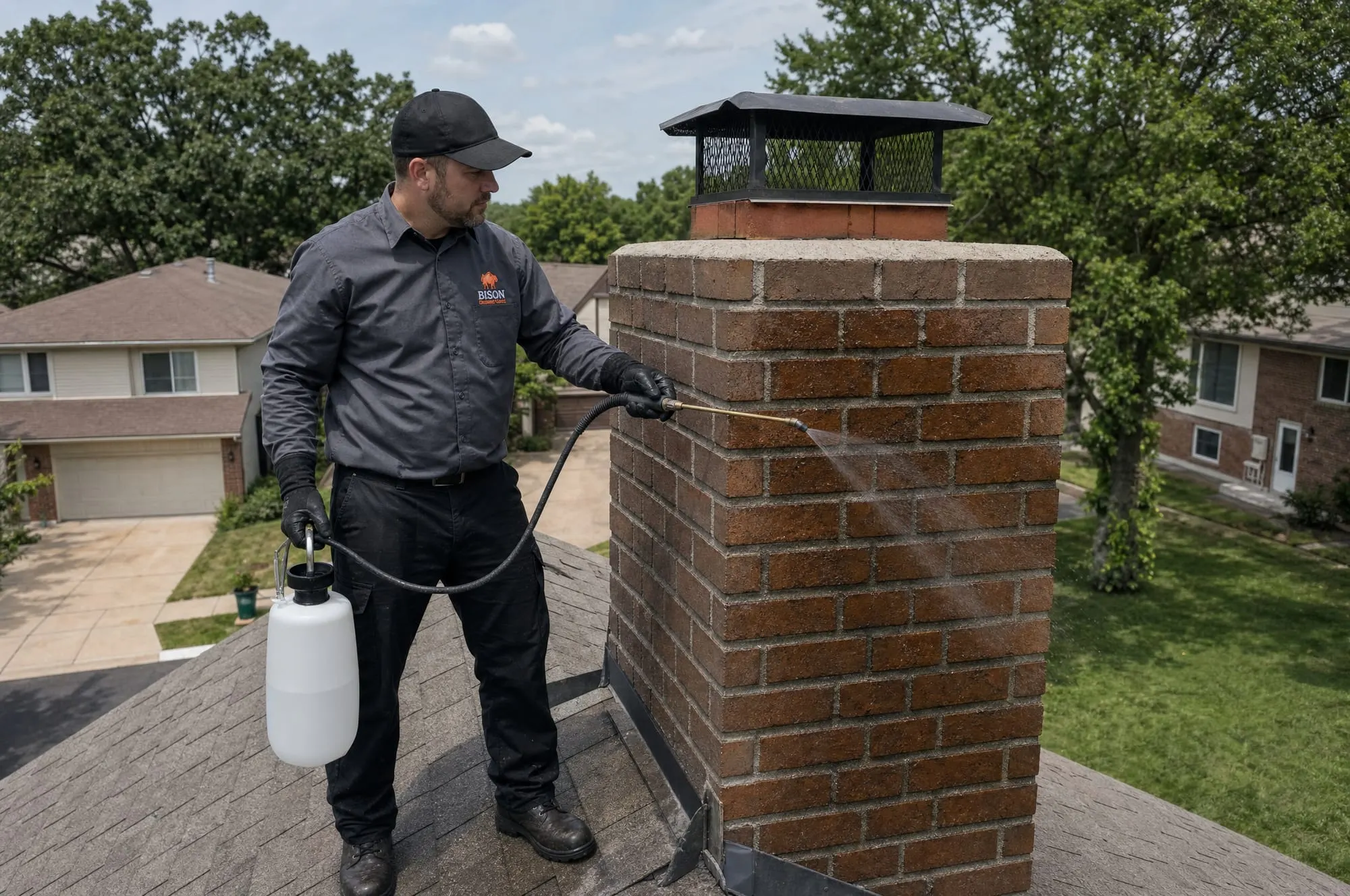
Masonry is going to get rained on. The goal is to keep the water on the surface instead of in the pores. A siloxane-based water repellent soaks into the brick and mortar, repels liquid water, and stays vapor-permeable so any moisture already inside can escape as vapor. It is invisible once dry and lasts about ten years.
The word “breathable” matters. Film-forming sealers, the kind sold as “masonry sealer” at hardware stores, seal the surface. Any water already inside the brick, or getting in through the crown, is trapped behind the film. It freezes there and the face of the brick comes off with the sealer still on it, which is worse than doing nothing. See chimney waterproofing for how the right product is applied.
What to check every spring
Late March or April, once the snow is gone and before the spring rains, walk around the house and look at the chimney with binoculars.
- Brick chips, mortar sand or pieces of crown in the gutters or on the roof
- Light-colored rough patches on the brick where a face has spalled
- A visible crack across the top of the crown, or pieces missing at the edge
- Recessed, crumbling or missing mortar joints, especially on the north and west faces
- White efflorescence or dark damp stains that persist a day after rain
- A cap that is missing, tilted or rusted through
- Flashing that has lifted or separated from the brick
- Inside the house: water stains on the ceiling or wall beside the fireplace, a rusty damper, or a musty smell in the firebox after rain
Spring is also the right time to have the work done. Masonry repair needs temperatures reliably above about 40°F to cure, and water repellent needs dry brick, so the window in Kansas runs from late spring through early fall. A chimney repaired in May goes into the next winter dry, and dry brick does not spall.
Catch it early and it stays small
The difference in cost between sealing a hairline crown crack and rebuilding the top of a chimney is large, and the only thing separating the two is a few winters of freeze-thaw. Bison Chimney & Air Duct inspects, repairs and waterproofs brick chimneys across Overland Park, Johnson County and the Kansas City metro, and we photograph everything from the roof so you can see what we see. Call us for a free estimate, or send us a photo of your chimney and we will tell you what we are looking at.