How Often Should Air Ducts Be Cleaned? NADCA vs. EPA Guidance
How often should air ducts be cleaned? NADCA says 3 to 5 years, the EPA says clean on condition. The triggers, what does not help, and Kansas City factors.
By Bison Chimney & Air Duct ·
Ask three people how often air ducts should be cleaned and you will get three answers: every year, every few years, and never. The two organizations whose opinions actually carry weight, NADCA and the EPA, land in different places too. Here is what each one says, why they differ, and how to decide for your own home.
What NADCA says: every 3 to 5 years
NADCA, the National Air Duct Cleaners Association, is the industry body that publishes the cleaning standard most reputable companies work from. Its guidance for a typical home is to have the HVAC system inspected and cleaned every three to five years, sooner if certain conditions apply.
NADCA’s reasoning is that a forced-air system moves every cubic foot of air in the house through the ducts several times a day, and the filter catches only part of what is in it. Over time the ducts, the blower wheel and the coil accumulate a layer of dust, dander and debris that gets stirred up each time the system starts. Three to five years is the interval at which that layer becomes worth removing in a normally occupied house.
What the EPA says: clean on condition
The Environmental Protection Agency takes a more cautious position. Its guidance is that duct cleaning has not been shown to prevent health problems in general, and that dust in ducts often stays in the ducts rather than entering the living space. It does not recommend routine cleaning on a calendar.
The EPA does recommend cleaning when there is a specific reason: visible mold growth inside the ducts or on other components, an infestation of rodents or insects, or ducts clogged with enough dust and debris that it is actually being released into the home through the registers. It also notes that if a cleaning is done, it should be done properly, by a company that cleans every component of the system, because a partial cleaning can make things worse by dislodging debris and leaving it in the airstream.
Why they differ, and why both are right
NADCA speaks for people who look inside ducts every day and see what accumulates. The EPA speaks for people who study health outcomes and have not found a measurable benefit from cleaning ducts that were not dirty to begin with.
Both agree on the point that matters: clean ducts that need it, and clean them properly. The disagreement is about whether “need it” comes on a schedule or from a trigger. For most homeowners, the practical answer is to look for the triggers, and to use the three-to-five-year mark as a prompt to check.
The triggers that mean it is time
If any of these apply to your house, the ducts are worth an inspection, and probably a cleaning.
- You just moved in. You do not know when the ducts were last cleaned, who lived there, or what pets they had. A cleaning resets the system to zero.
- A renovation or drywall work. Drywall dust and sawdust are fine enough to pass a standard filter and heavy enough to settle in the trunks. If the system ran during the work, the ducts caught it.
- Water damage or a flooded basement. Wet ducts and a wet furnace compartment grow mold within days. Cleaning and treatment, plus fixing the moisture source, are the fix.
- Pets. Hair and dander accumulate faster than in a pet-free home, and much of it ends up on the blower wheel and coil.
- Allergies or asthma in the house. Cleaning does not cure either, but removing the reservoir of dust and dander that recirculates with each cycle reduces the load.
- Visible dust puffing from registers, debris inside the supply vents, or a dusty smell when the heat first comes on in fall.
- Rodents or insects. Evidence of either in the ducts is a cleaning plus a sealing job.
- It has been more than five years, or never. Many homes fall in the “never” category.
What does not help
Sanitizer alone
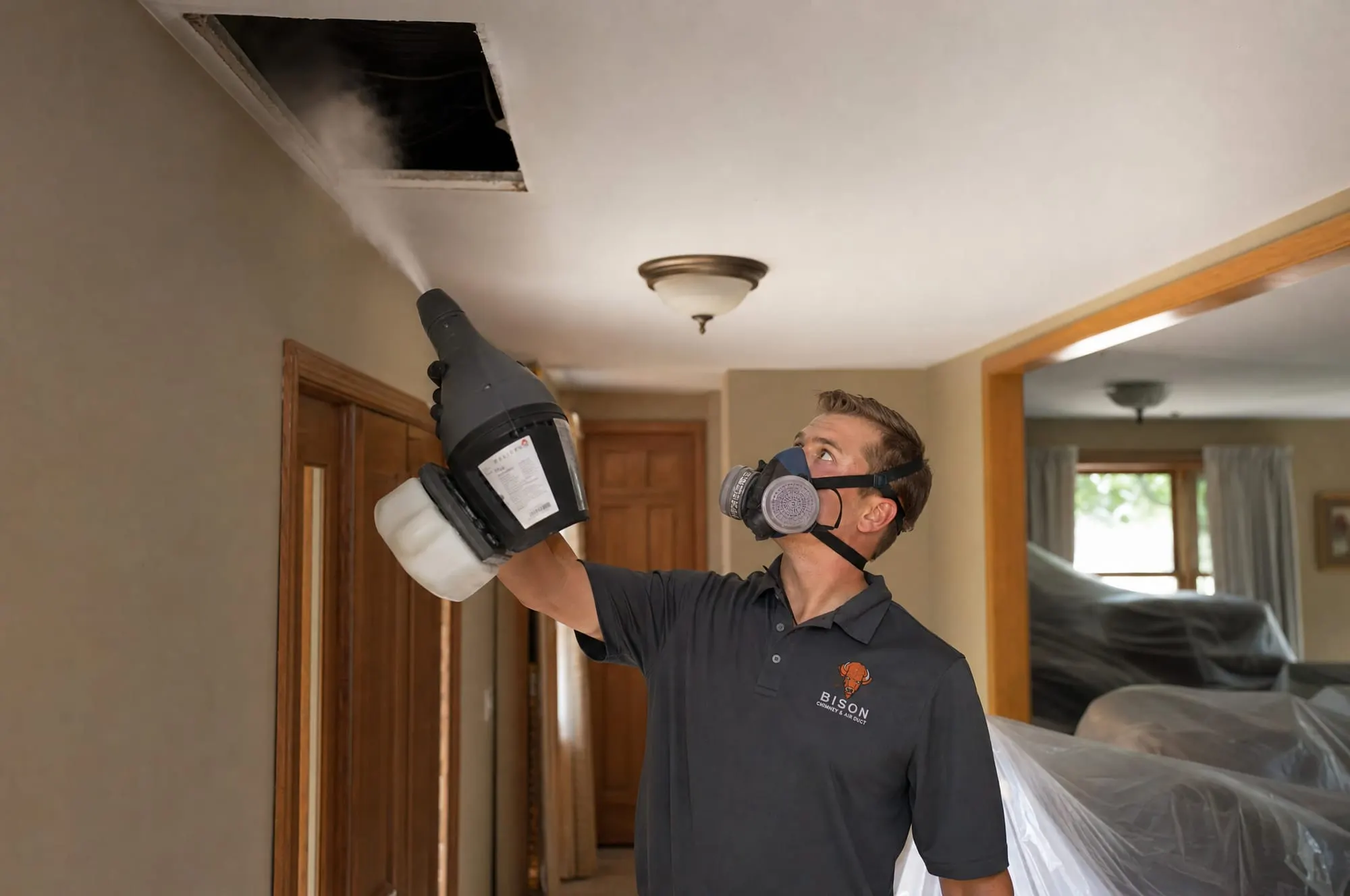
The most common shortcut sold locally is a “sanitizing” or “fogging” treatment sprayed into the ducts without cleaning them first. Antimicrobials only work on surfaces they can reach. Sprayed on a layer of dust, they treat the dust. Sanitizing has a legitimate place after a cleaning when there is confirmed mold or a lingering odor, and no place as a substitute for removing the debris. Our duct sanitizing page explains when it makes sense.
Cleaning the ducts and skipping the furnace
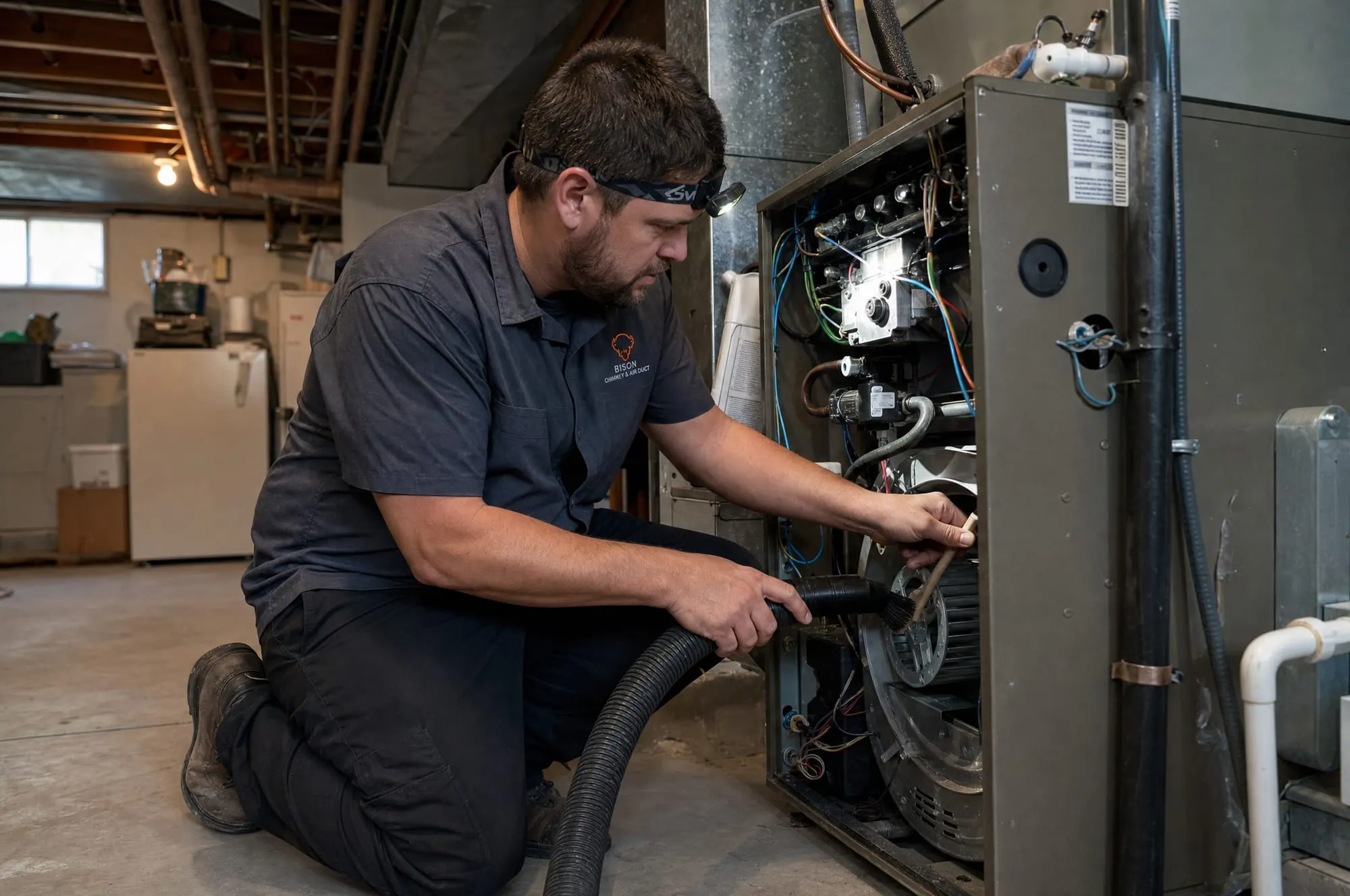
The blower wheel and evaporator coil are where the heaviest buildup sits. A cleaning that stops at the ducts leaves the dirtiest component in the system to reseed the ducts you just paid to clean. Ask for the blower and coil to be included, always.
A cleaning done with a shop vac
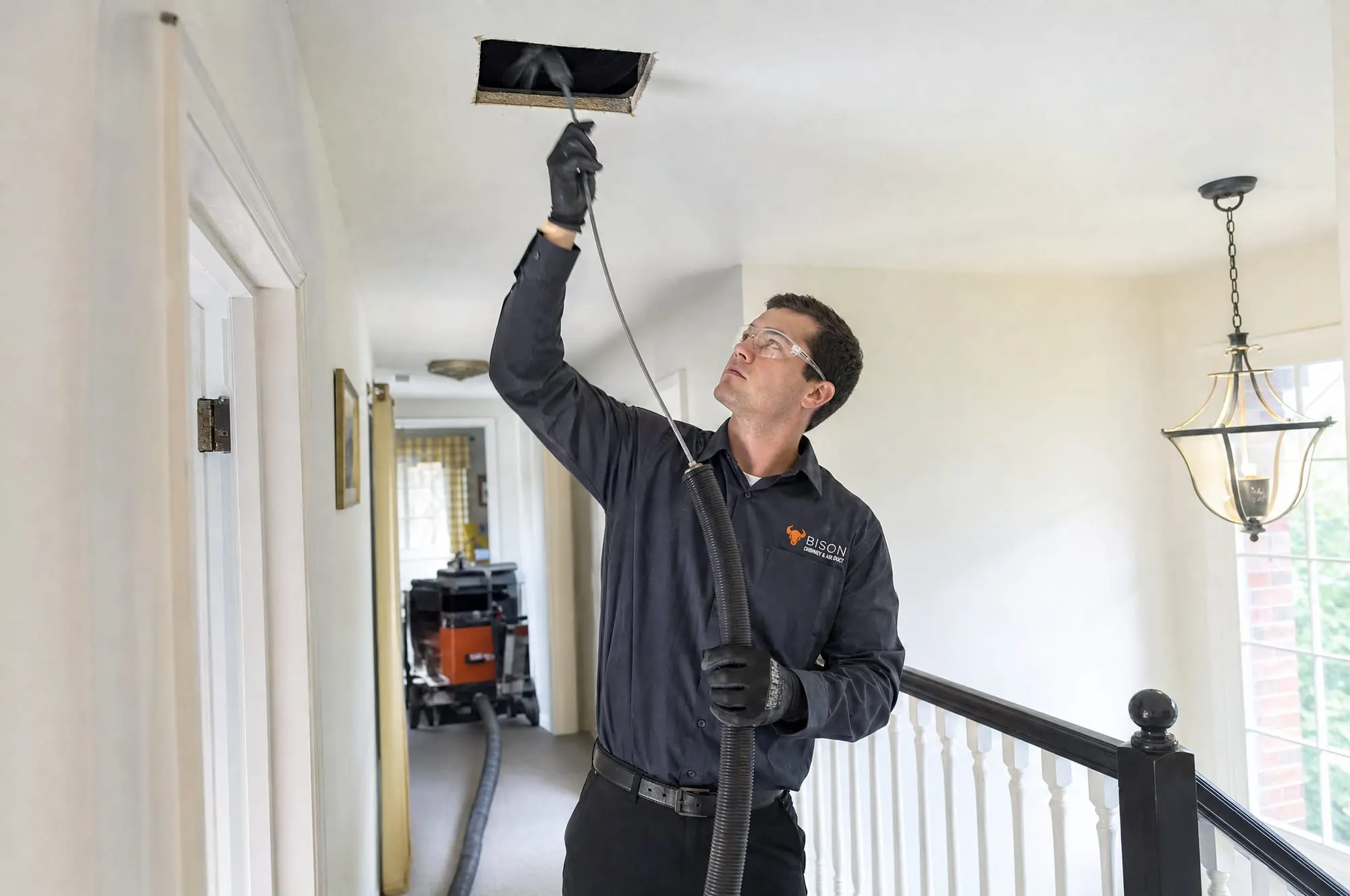
Source removal means the whole system under negative pressure with mechanical agitation in every run. A vacuum on one register is not that. The EPA’s warning about partial cleanings making things worse applies here.
Better filters as a replacement for cleaning
A high-quality filter slows accumulation going forward. It does not remove what is already in the trunk lines, and a filter rated too high for the system restricts airflow and stresses the blower.
Kansas City specifics
A few local factors push homes here toward the shorter end of the NADCA range.
Spring wind and dust. Kansas springs are windy, and open windows in April and May pull fine dust and pollen into the house. Whatever the filter misses settles in the returns.
1980s construction dust that never left. A large share of Overland Park, Lenexa and Olathe was built in the 1970s and 1980s. Ducts in those homes were installed before the drywall went up, and when the finishing crews sanded, the ductwork caught the dust. In homes that have never been cleaned, that original drywall dust is still there forty years later, along with everything since. A first cleaning on one of these homes removes an amount of debris that surprises most owners.
Humid summers and cold winters. Homes here run the air conditioner hard from June through September, so the evaporator coil is wet for months, and then the furnace bakes whatever landed on it. That cycle is why the “burning dust” smell on the first cold night is so familiar here.
Basements and crawlspaces. Return ducts running through a damp basement or an unfinished crawlspace pick up moisture and, sometimes, growth, which then rides the airstream upstairs.
A simple way to decide
Pull a supply register and look inside with a flashlight. Look at the return grille and the filter rack. Open the furnace access panel, if you are comfortable doing so, and look at the blower fins. If what you see is a thin film, wait. If it is a visible layer, fuzz on the blower, or anything you would not want to breathe, book a cleaning. If you are unsure, ask a company to photograph inside the trunk line before quoting. A good one will tell you if the ducts are clean and send you on your way.
Ready to check yours?
Bison Chimney & Air Duct photographs inside your ducts first and only recommends cleaning when there is something to remove. When there is, we clean every supply, return, trunk, plenum, the blower and the coil under negative pressure, the way NADCA describes, across Overland Park, Johnson County and the Kansas City metro. Call us for a free estimate, or tell us about your home and we will quote it flat on the phone.