Buying a Home in Johnson County? Get a Level 2 Chimney Inspection
Buying in Johnson County? Why a Level 2 chimney inspection matters: the NFPA 211 levels, what the camera finds that home inspectors miss, and how to use the report.
By Bison Chimney & Air Duct ·
The home inspection is done, the report is forty pages long, and the fireplace section says “appears serviceable, recommend evaluation by a qualified chimney professional.” Most buyers read that line, shrug, and move on to the roof and the furnace. In Johnson County, where a large share of the housing stock has a masonry fireplace built between 1960 and 2000, that line is the most expensive sentence in the report to ignore.
This post explains what a Level 2 chimney inspection is, why the general home inspector did not do it, what the camera finds, and how to use the results before you close.
The three inspection levels in NFPA 211
NFPA 211 is the National Fire Protection Association’s standard for chimneys, fireplaces and vents. It defines three levels of inspection, and it is specific about when each applies.
Level 1
A visual inspection of the readily accessible parts of the chimney: the firebox, the damper, the visible portion of the flue from below and from the roof, and the appliance connection. It is the annual check for a chimney that has been used normally and has not changed. It is included with a routine sweep.
Level 2
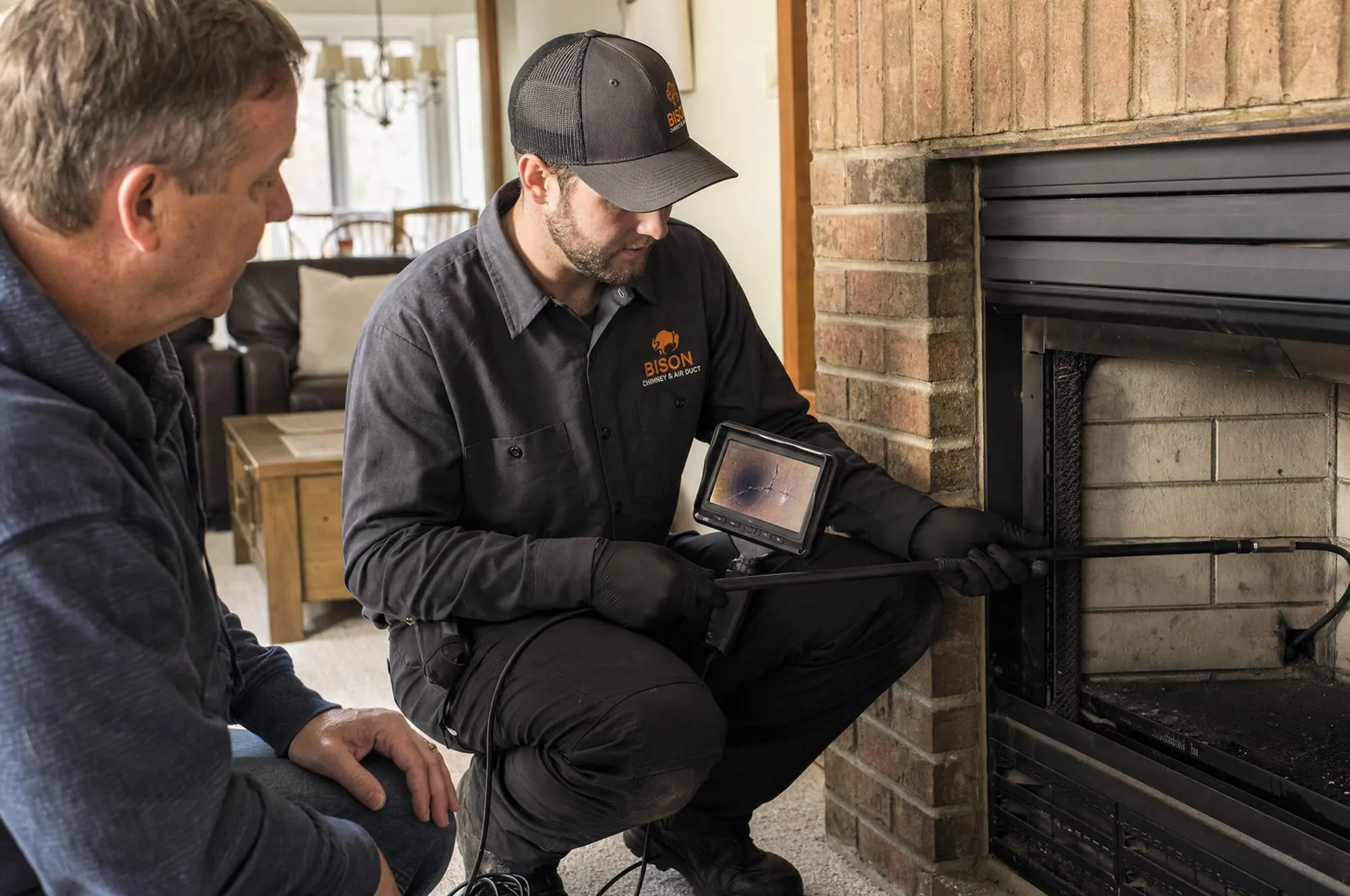
Everything in Level 1, plus a video scan of the full interior of the flue, plus inspection of accessible attics, crawlspaces and basements where the chimney passes through. NFPA 211 calls for a Level 2 inspection whenever something has changed: the property is sold or transferred, a new appliance is connected, the fuel type changes, or there has been a chimney fire, lightning strike or other event that could have damaged the flue. A home sale is on that list by name.
Level 3
Level 2 plus the removal of building components to reach a suspected hazard. It is rare, and it is only ordered when a Level 2 finds something that cannot be confirmed any other way.
For a home purchase, Level 2 is the standard. Not a “chimney check,” not a sweep, not a glance up the flue with a flashlight. Our chimney inspection page lists exactly what each level includes.
Why the home inspector did not scope the flue
This is not a criticism of home inspectors. It is a scope issue.
Home inspection standards of practice ask the inspector to observe the readily visible parts of the fireplace and chimney and to note obvious defects. They do not require the inspector to run a camera up the flue, and most do not carry one. The flue interior is, by definition, not readily visible.
So the inspector looks in the firebox, checks that the damper opens, looks at the chimney from the ground or the roof, and writes the recommendation line. That line is your cue to bring in a chimney professional while you are still inside your inspection period.
What the camera finds that eyes cannot
A chimney camera travels the full length of the flue and records every joint on the way. Here is what it finds in Overland Park, Leawood and Prairie Village homes, in roughly the order we see them.
Cracked flue tiles
Clay flue tiles crack from thermal shock, from settling, and from chimney fires the seller may not know happened. A cracked tile means the flue can no longer contain a fire or keep carbon monoxide inside the chimney. From the firebox, a cracked tile eight feet up is invisible. On camera it is obvious.
Missing or washed-out mortar joints
Tiles are stacked and mortared together. When the joints fail, flue gases and heat reach the brick and the framing behind it. Gaps in the joints are among the most common findings in Level 2 inspections on homes over thirty years old.
Glazed creosote
Shiny, hard, black glaze on the flue walls is Stage 3 creosote. It is highly flammable, it does not sweep off, and it usually means the fireplace was burned with wet wood or the damper was kept too far closed. It is also a sign that a chimney fire may already have happened.
Offset or shifted liners
Sections of tile that have moved out of alignment create ledges that catch creosote and let gases escape. They often point to a past fire or to structural movement.
Nests, debris and the missing cap
Uncapped flues collect leaves, squirrel nests and the occasional raccoon. Blockages restrict draft and can push smoke and carbon monoxide back into the house.
Signs of a past chimney fire
Puffy, honeycombed creosote, cracked tiles with clean edges, warped dampers and discolored mortar all indicate the chimney has already burned once. Sellers rarely disclose this, often because they never realized it happened.
What the report gives you
A proper Level 2 inspection ends with a written report and photos or video, not a verbal “looks fine.” You should receive a summary of each component, images of any defects, a clear statement of whether the chimney is safe to use as is, and an estimate for any repairs. At Bison, that report goes out the same day.
Ask for the footage. A company that will not give you the video is asking you to take their word for it.
How to use the report in negotiation
A chimney with cracked tiles or failed joints is not safe to use until it is relined, and a stainless steel liner is a real expense. A cracked crown or spalling brick above the roofline means masonry repair. These are legitimate items for a repair request or a credit at closing, and the report gives you the documentation to ask.
A few practical points:
- Get the inspection inside your inspection period, not after. Book it the same week as the general home inspection.
- Ask the chimney company for a written repair estimate along with the report. A number on paper is what your agent needs.
- Decide what matters to you. A missing cap is a quick fix. A relining is a negotiation.
- If the seller offers to have “their guy” fix it before closing, ask for the invoice and a post-repair camera scan.
If you are the seller, a Level 2 inspection before listing can be just as useful. You find the problem first, fix it or price it in, and hand the buyer a clean report instead of a surprise.
What about gas fireplaces and furnace flues?
A Level 2 inspection is not only for wood-burning fireplaces. If the furnace or water heater vents through the masonry chimney, that flue needs the same camera scan. Modern high-efficiency appliances produce cool, wet exhaust that eats mortar joints from the inside, and a deteriorated furnace flue is a carbon monoxide problem, not a fireplace problem. Ask the inspector to scope every flue in the chimney.
Book the inspection before you close
Bison Chimney & Air Duct performs NFPA 211 Level 2 chimney inspections across Overland Park, Johnson County and the Kansas City metro, with a same-day written report, photos and a repair estimate you can take straight to your agent. Call us for a free estimate, or reach out through our contact page with your closing date and we will fit you in before the deadline.