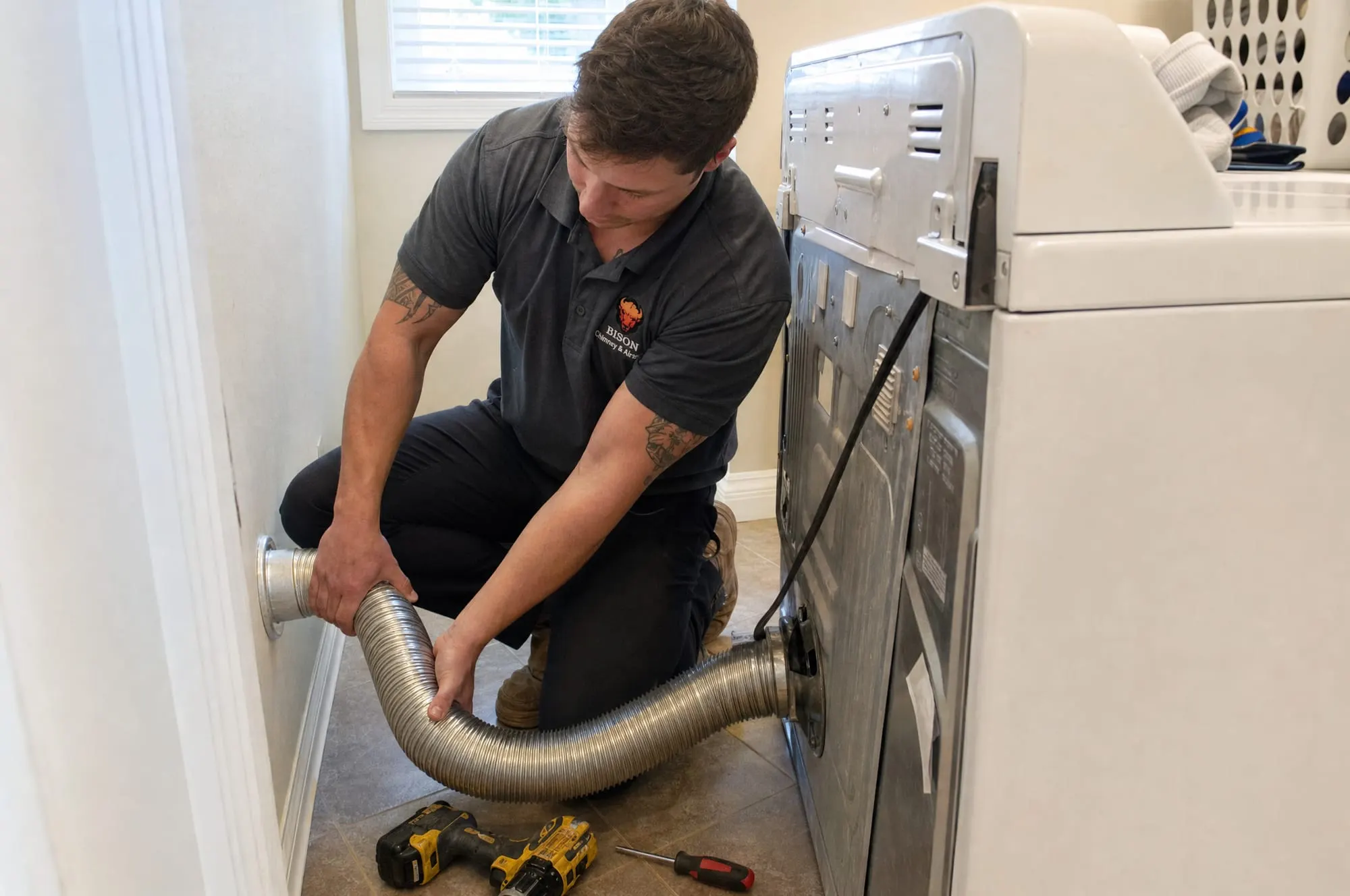
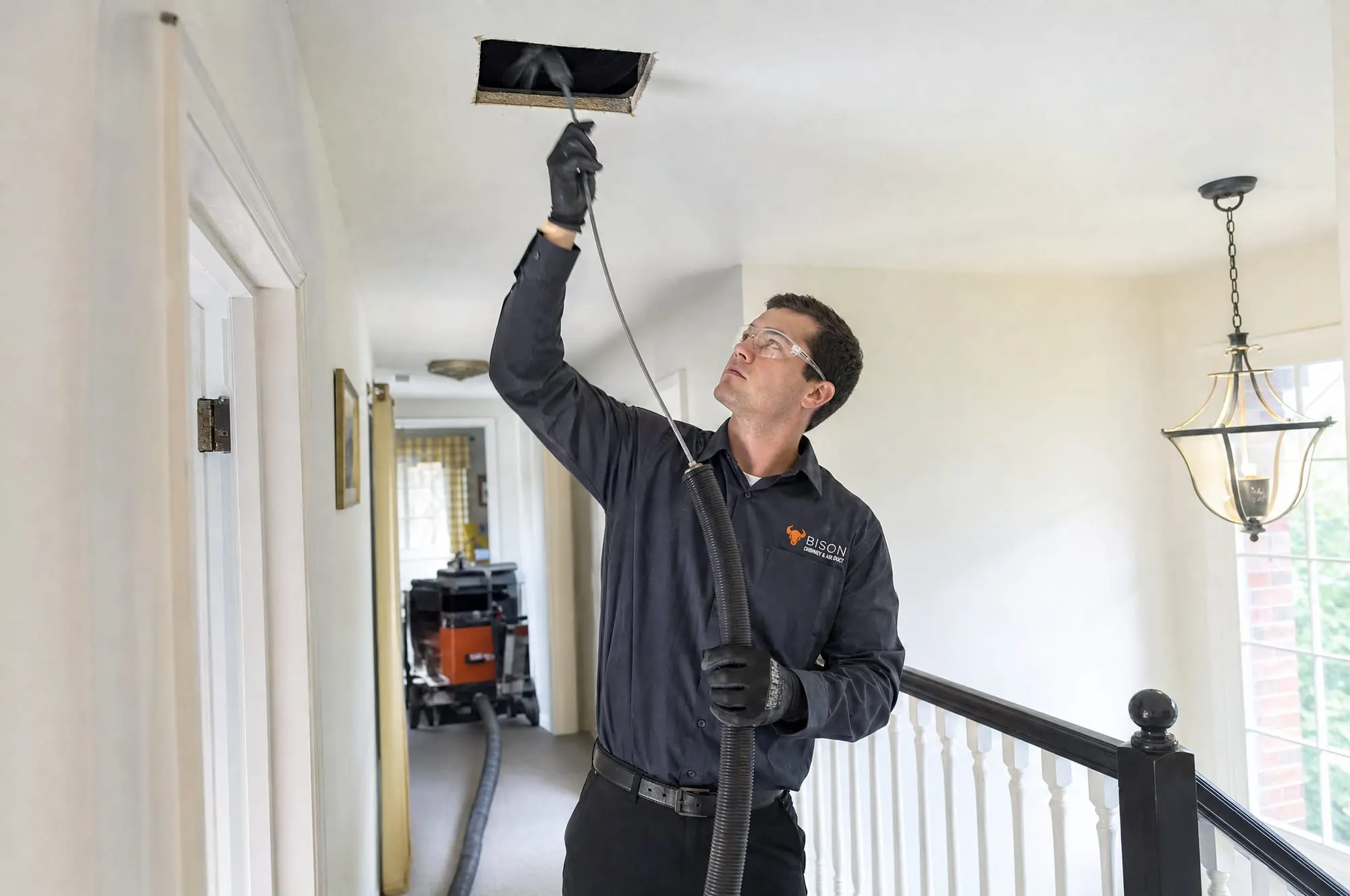
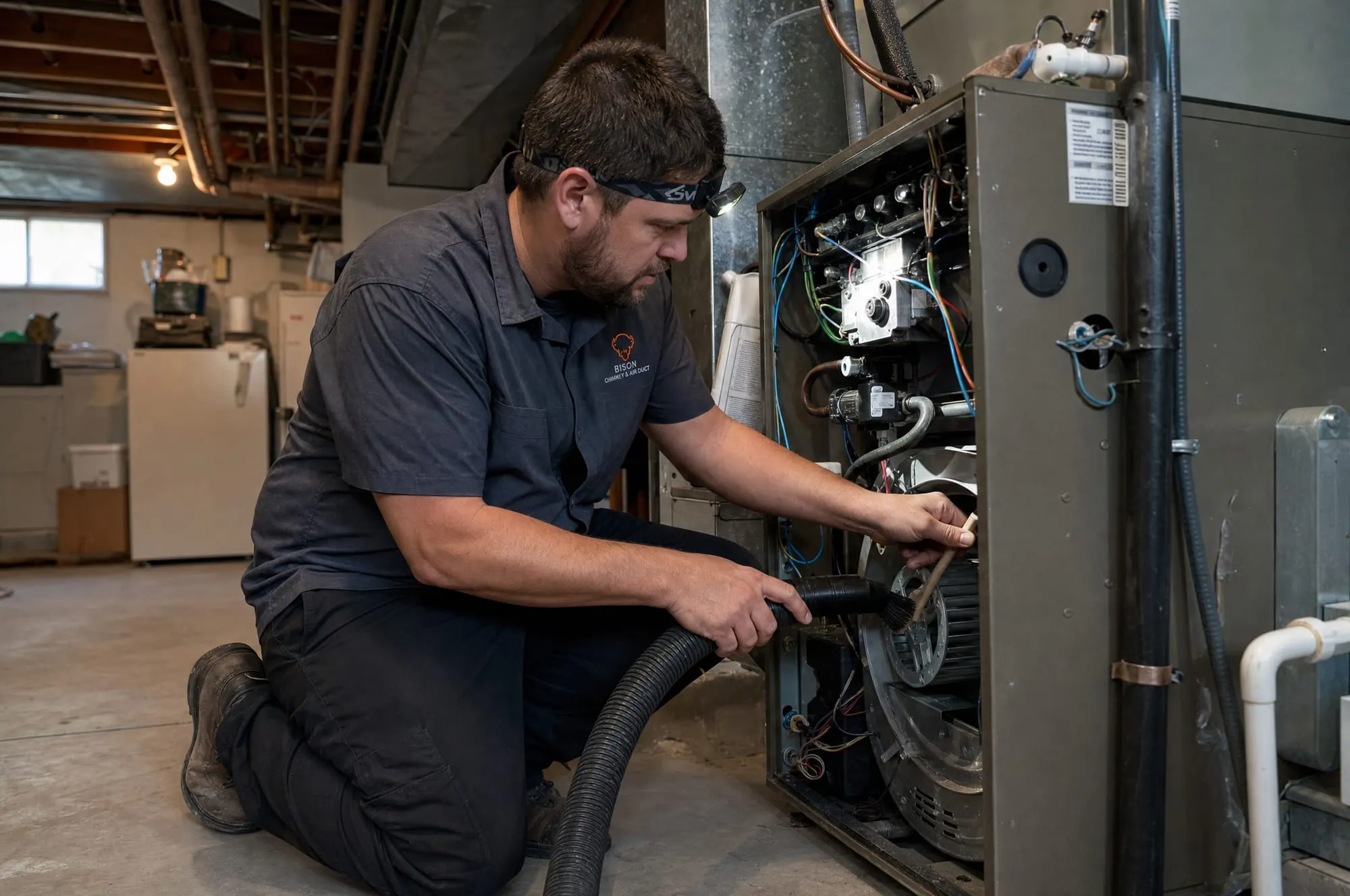
In Overland Park the dryer vent problem depends on the decade the house was built. The 1960s and 1970s homes in Regency Park and Nottingham usually have a basement or first-floor laundry with a short run straight out a wall, which clogs slowly but is often connected with a crushed foil hose behind the dryer. The Blue Valley and Deer Creek homes have second-floor laundry rooms with a vent that runs twenty to forty feet up through the attic and out the roof, and those clog fast. Bison cleans both types end to end and measures airflow before and after so you know it worked.
Because our trucks start the day in Overland Park, a dryer vent cleaning here is one of the easiest appointments to fit in, often the same day someone calls about a dryer taking two cycles. Kansas humidity matters for vents more than people think: damp lint packs harder in summer and sticks at every elbow, and the roof cap flap on a Blue Valley home can seize with lint and a wasp nest at the same time. A cleaning from the dryer end and the roof end clears the whole run, and we replace a foil or vinyl transition hose on the spot when you approve.
Dryer Vent Cleaning notes for Overland Park
- Second-floor laundry rooms in Blue Valley subdivisions south of 135th Street usually vent through the roof; that vertical run traps falling lint at the bottom elbow and needs cleaning every six months or so.
- Older Nottingham and Regency Park homes often have a dryer vent exiting through the rim joist into a window well or under a deck, where the flap gets blocked by leaves and mulch.
- Deer Creek and other 1990s homes sometimes have a dryer vent that shares an attic with a bath fan duct; we confirm the dryer vent reaches the roof cap and does not stop short in the insulation.
- Homes remodeled near Downtown Overland Park frequently have the laundry moved to a new location with a long, elbow-heavy vent that exceeds code length; a booster fan or reroute is the safe fix.
What's included
- Dryer pulled out, transition hose disconnected and cleaned
- Full-length rotary brush cleaning of the vent from both ends
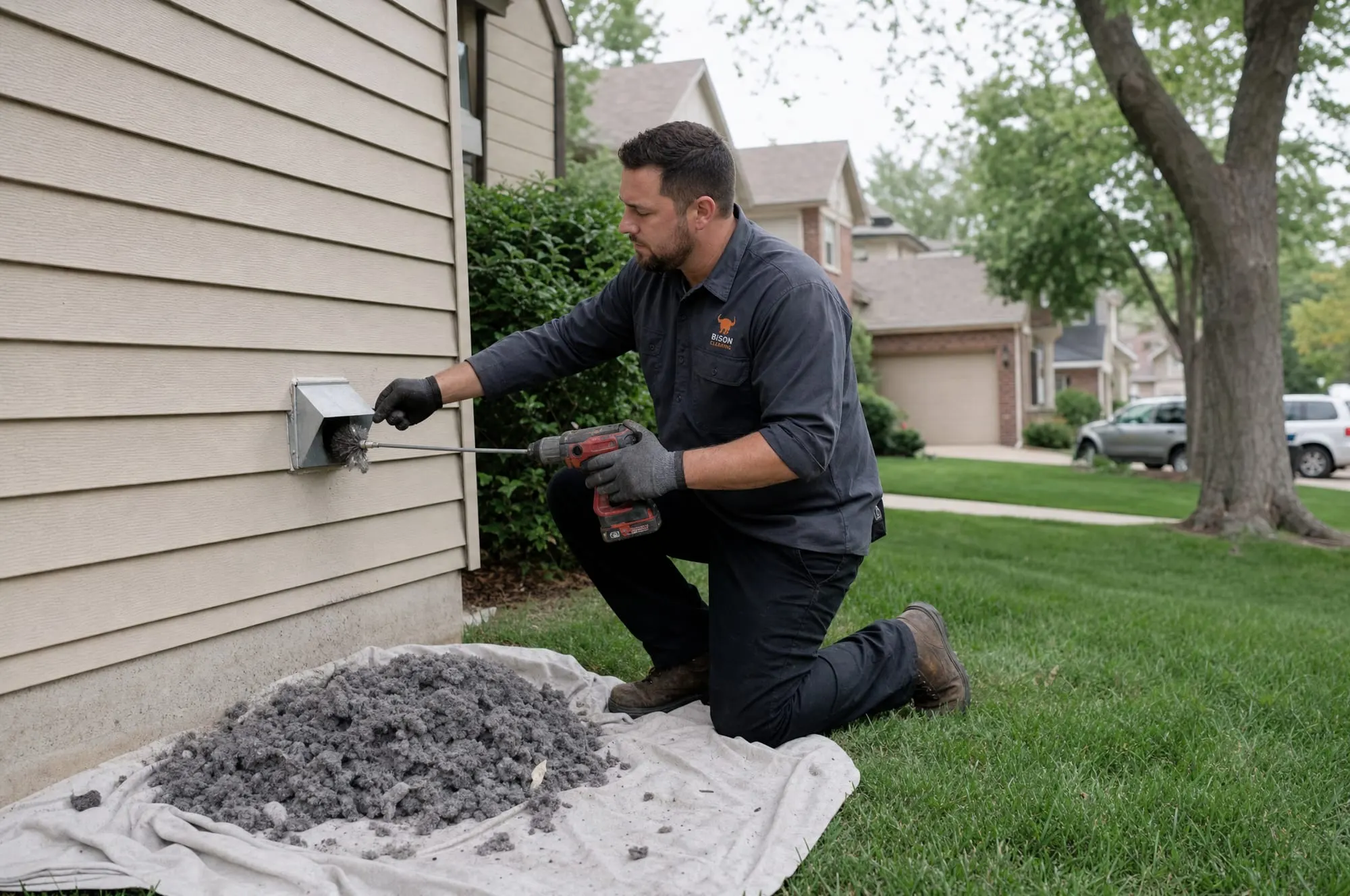
- Exterior wall or roof cap cleared and checked for a working flap
- Lint trap housing vacuumed inside the dryer
- Airflow measurement before and after
- Inspection of the vent material and routing, with recommendations if it is unsafe
How often should a dryer vent be cleaned?
Once a year for a typical family, and twice a year for large families, long vent runs, or vents that go up through the roof. If your dryer is taking two cycles to dry a load, do not wait for the annual appointment; that is the vent telling you it is blocked.
Why long and roof-terminated vents clog so fast
Building code limits a dryer vent to 35 feet of equivalent length, with each 90-degree elbow counting as five feet. Many homes built in the 1990s and 2000s have laundry rooms in the middle of the house with vents that run 30 or 40 feet up through the roof. Lint falls back down and mats at every elbow, and the roof cap flap sticks. These vents need cleaning every six months, and often need rerouting or a booster fan to be safe.
Signs your dryer vent is clogged
- Clothes take more than one cycle to dry
- The dryer and the laundry room feel hot
- A burning smell while the dryer runs
- Lint around the exterior vent cap, or the flap does not open
- The lint trap fills unusually fast or barely at all
- It has been more than a year since the last cleaning
Dryer Vent Cleaning in Overland Park: FAQs
Can you clean my dryer vent in Overland Park today?
Often yes. Overland Park is where we start every morning, so gaps in the schedule tend to land here. Call early in the day for the best chance at a same-day slot.
My Overland Park laundry room is upstairs and the dryer runs hot. Is that the vent?
Almost certainly. Second-floor laundry rooms in Blue Valley homes vent through the roof, and that long vertical run clogs faster than a wall vent. We clean it from both ends and check the roof cap flap.
How much does dryer vent cleaning cost?
Dryer vent cleaning is a flat price for standard runs, with a small addition for roof terminations. Bundle it with a chimney sweep or duct cleaning and it is discounted. Call for current pricing.
How long does it take?
Usually 30 to 60 minutes. Roof vents and severely clogged runs can take longer.
Can a clogged dryer vent really cause a fire?
Yes. Lint ignites at a relatively low temperature, and a restricted vent makes the dryer run hotter. The U.S. Fire Administration reports thousands of dryer fires every year, most from lint buildup.
Also serving
- Dryer Vent Cleaning in Leawood
- Dryer Vent Cleaning in Olathe
- Dryer Vent Cleaning in Lenexa
- Dryer Vent Cleaning in Shawnee
- Dryer Vent Cleaning in Prairie Village
- Mission, KS
- Merriam, KS
- Gardner, KS
- Mission Hills, KS
- Roeland Park, KS
- Fairway, KS
Read the full Dryer Vent Cleaning service page or see everything we do in Overland Park.